August 22nd: Today's Feature - Notting Hill
- Aug 21, 2025
- 5 min read
August
Notting Hill is a district of West London, England, in the Royal Borough of Kensington and Chelsea. Notting Hill is known for being a cosmopolitan and multicultural neighbourhood, hosting the annual Notting Hill Carnival and Portobello Road Market. From around 1870, Notting Hill had an association with artists.
For much of the 20th century, the large houses were subdivided into multi-occupancy rentals. Caribbean immigrants were drawn to the area in the 1950s, partly because of the cheap rents, but were exploited by slum landlords like Peter Rachman and also became the target of white Teddy Boys in the 1958 Notting Hill race riots.
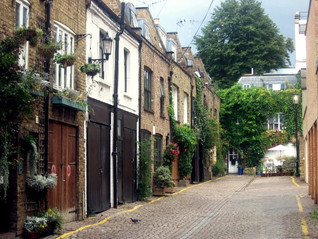
In the early 21st century, after decades of gentrification, Notting Hill had by then gained a reputation as an affluent and fashionable area, known for attractive terraces of large Victorian townhouses and high-end shopping and restaurants (particularly around Westbourne Grove and Clarendon Cross). A Daily Telegraph article in 2004 used the phrase "the Notting Hill set" to refer to a group of emerging Conservative politicians, such as David Cameron and George Osborne, who would become respectively Prime Minister and Chancellor of the Exchequer and were once based in Notting Hill.


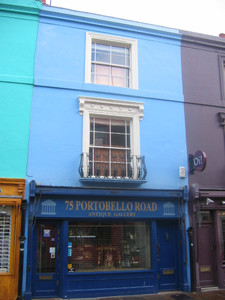
Portobello Road runs almost the entire length of Notting Hill from north to south. It runs parallel to Ladbroke Grove. It contains Portobello Road Market, one of London's best known markets, containing an antique section and second-hand, fruit and veg and clothing stalls. The road was originally a lane leading to Portobello Farm in the north of Notting Hill.
Ladbroke Grove is a road running down the west side of Notting Hill, stretching up to Kensal Green, straddling the W10 and W11 postal districts, and also the name of the immediate area surrounding the road. Ladbroke Grove tube station is on the road where it is crossed by the Westway.
A turnpike gate was constructed at the foot of the hill on the main road from London to Uxbridge, now Oxford Street, Bayswater Road and Holland Park Avenue along this part of its route. The point at which the turnpike gate stood was known as Notting Hill Gate. The gate was there to stop people passing along the road without paying. The proceeds were applied towards the maintenance of this important road. The gate was removed in the 19th century and the high road was widened and straightened in the 1960s, involving the demolition of many buildings, the linking of two separate tube stations and the construction of two tower blocks.

Westbourne Grove is a retail road running across Notting Hill from Kensington Park Road in the west to Queensway in the east, crossing over Portobello Road. It was noted as "fashionable" and "up-and-coming" from the 1990s since then it has attracted many designer label outlets as well as independent and chain retailers.
The Notting Hill Carnival passes along the central part of Westbourne Grove.


Westbourne Green
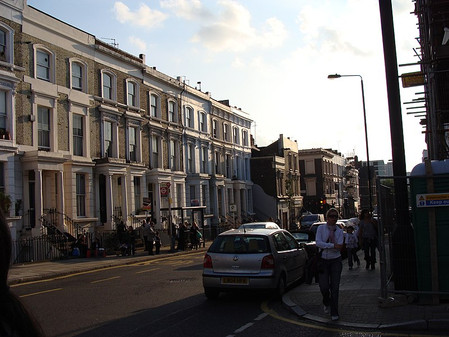
Westbourne Green is the area in between Westbourne Park Station and Royal Oak Station and is made up of mainly residential roads with Westbourne Park Road running through the entire area to the east of Notting Hill. This area houses 2 very popular drinking establishments, 'The Cow' and 'The Westbourne' situated central to Westbourne Green. The Westbourne Green section of Notting Hill comes under Westminster City Council.
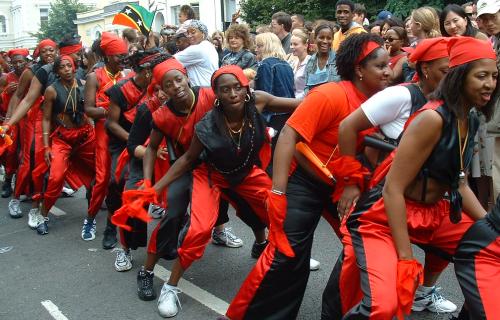
The Notting Hill Carnival also passes through Westbourne Green up Chepstow Road and turns right onto Westbourne Grove.
Kensal Green is in the north of Notting Hill. It is the area north of the respective iron bridges on Ladbroke Grove and Golborne Road. Parts of this area fall under the London Borough of Brent. It has been earmarked for regeneration around the proposed crossrail station next to Sainsbury's.
The area is served by Kensal Green station (Underground and Overground).



North Kensington is the key neighbourhood of Notting Hill. It is where most of the violence of the race riots occurred, where the Notting Hill Carnival started and where most of the scenes in the film, Notting Hill were shot.
The area's main transport hub, Ladbroke Grove tube station, was called Notting Hill from its opening in 1864 until 1919. The name was changed then to avoid confusion with the new Notting Hill Gate station. Ladbroke Grove is the area's main thoroughfare.
Estate agents now call the super-rich area to the south Notting Hill when referring to Notting Hill Gate and Holland Park.
North Kensington was once well known for its slum housing and retains high levels of poverty, unemployment and a high-proportion of social housing for rent. In this area, Grenfell Tower is also found, which burnt down in 2017.

Waves of immigration to the area have occurred for at least a century, including, but certainly not limited to, people of Irish, Jewish, Caribbean, Spanish, and Moroccan extraction. This constant renewal of the population makes the area one of the most cosmopolitan in the world.
Notting Hill Carnival is an annual Caribbean carnival event in August, over two days (Sunday and the following bank holiday). It has continuously taken place since 1965. It is led by members of the Caribbean population, many of whom have lived in the area since the 1950s. The carnival has attracted up to 1.5 million people in the past, putting it among the largest street festivals in Europe.
It attracted press attention in 1976 for clashes with the police, which occurred in 1976 at the conclusion of the Notting Hill Carnival after police arrested a pickpocket and a group of black youths came to his defence. The disturbance escalated and more than 100 police officers were injured. Two notable participants in this riot were Joe Strummer and Paul Simonon, who later formed the seminal London punk band The Clash. Their song "White Riot" was inspired by their participation in this event. Further incidents continued for a few years, but receded for several decades, until 2008 when approximately 500 youths clashed with police on the Monday.




As the event grew, concerns about the size of the event prompted Ken Livingstone to set up a Carnival Review Group to look into "formulating guidelines to safeguard the future of the Carnival". An interim report by the review resulted in a change to the route in 2002. When the full report was published in 2004, it was recommended that Hyde Park be used as a "savannah"; though this move has attracted some concern that the Hyde Park event may overshadow the original street carnival.
In 2003 Carnival was run by a limited company, the Notting Hill Carnival Trust Ltd. A report by the London Development Agency on the 2002 Carnival estimated that the event contributes around £93 million to the London and UK economy.