December 6th: Today's Feature - Tessa Sanderson, Athlete
- Dec 6, 2025
- 4 min read
December
Part 2: Tessa Sanderson
Return to competition
After a four-year hiatus, Sanderson returned to track and field competition in 1996. She set masters (over-40) record throws of 58.18 m (190 ft 101⁄2 in) and 60.64 m (198 ft 111⁄4 in) with her first two throws in May, surpassing the previous record of 51.84 m (170 ft 3⁄4 in). After two further masters-record throws, Sanderson increased the record to 64.06 m (210 ft 2 in) at the Securicor Games in July.
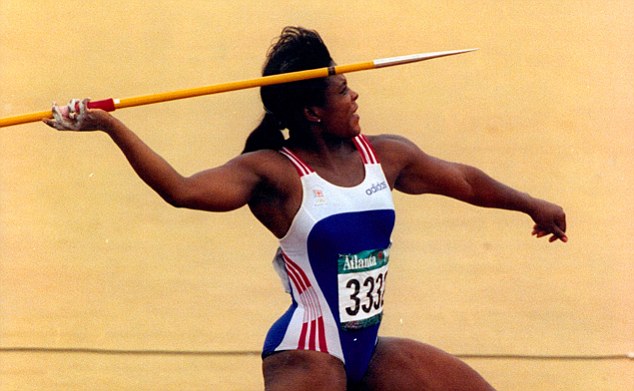
At the 1996 Summer Olympics, she became the second track and field athlete (after Romanian discus thrower Lia Manoliu) to compete at six Olympics but did not qualify for the final. Sanderson also failed to qualify for the final at the 1997 World Championships, her last international appearance. Sanderson retired from competition in 1997; Whitbread had retired five years earlier.
During the 1970s, the use of performance-enhancing drugs was common in throwing events; Sanderson spoke against the practice, consistently maintaining an anti-doping stance. Her rival, two-time Olympic champion Fuchs, later admitted using steroids in the East German sports programme.


The East German team did not compete in the 1984 Olympic Games as they participated in a wider boycott led by the Soviet Union. Sanderson told reporters from The Daily Telegraph in 2021 that she felt during her career she had been "robbed" of medals by losing to competitors using drugs.
Outside Competition
Sanderson has appeared as a guest on several television shows, including panel games A Question of Sport (in 1979), Bullseye (1984), Catchphrase Celebrity Special (1991), and Celebrity Wife Swap (2009). When Sky News was launched in 1989, Sanderson was a sports reporter for the channel, and she also co-hosted ITV's light-entertainment programme Surprise Surprise with Cilla Black.
In 2012, Sanderson was in "Billy's Olympic Nightmare", a BBC Red Button episode of soap opera EastEnders, and was a contestant on ITV's Dancing on Ice Goes Gold in the same year. At age 58, she began modelling for the Grey Model Agency.
Sanderson was vice-chair of Sport England from 1999 to 2005. In 2006, she founded an academy in Newham which helped to find and train athletes to represent Britain in the 2012 Summer Olympics. The Tessa Sanderson Foundation and Academy was established in September 2009 to encourage young people and people with disabilities to take up sport with mentoring and support.



From 2009 to 2013, Sanderson organised an annual 10 km race in Newham; part of the route was through Olympic Park. Although the 2013 event attracted 3,000 participants (representing 45 different nationalities), it was cancelled in 2014; Sanderson said that the Newham Council wanted to double its fee, and delayed meeting about the race. Sanderson was appointed to the board of the Olympic Park Legacy Company, chaired by Baroness Ford, to "develop and manage" the park after the 2012 Olympics.
Honours
Sanderson, the British Athletics Writers' Association Athlete of the Year in 1977, 1978 and 1984, was inducted into the England Athletics Hall of Fame in 2012. Candidates for the Hall of Fame are selected by a panel of experts and then voted on by the public. She was appointed a Member of the Order of the British Empire (MBE) in the 1985 New Year Honours after her Olympic gold-medal performance, raised to Officer (OBE) in the 1998 New Year Honours for her charity work, and to Commander (CBE) in the 2004 New Year Honours for her service to Sport England.
Sanderson is an honorary graduate of the University of Wolverhampton, and was made an Honorary Fellow of London South Bank University in 2004. That year, she was one of 100 Great Black Britons in a poll taken after the BBC's 100 Greatest Britons failed to include any Black Britons. Later that year, Sanderson received a Sportswomen of the Year Lifetime Achievement award from The Sunday Times.


A housing estate in Wednesfield near where she began learning the javelin throw was named Sanderson Park after her. Two roads are named after her: Tessa Sanderson Place is near Wandsworth Road in South London, and Tessa Sanderson Way is in Greenford, West London.
Personal life
Sanderson has spoken about the discrimination she has experienced as a black woman. She told The Guardian in 1990 that she had faced racial discrimination (although not in her sporting career), and she felt that sexism was the reason women athletes were not adequately paid.
Sanderson experienced racist language and behaviour in school (including being spat on), and has spoken about receiving a racist letter saying that she was not truly British after her 1984 Olympic gold medal. She told Sky Sports in October 2020, "Black athletes didn't have the voice they have now, so I just had to fight my own battles", and expressed disappointment at the continuing lack of Black, Asian and minority representation in sports governing bodies.


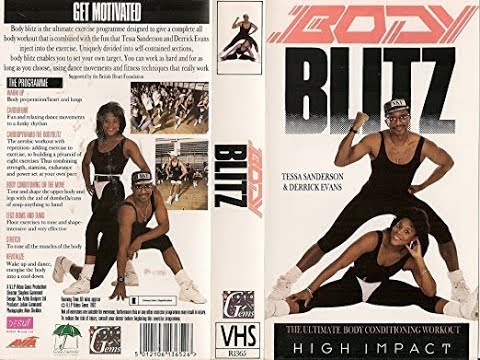
Tessa: My Life in Athletics, Sanderson's autobiography, was published in 1986. In 1990, she sued several newspapers and was awarded £30,000 in damages by the High Court of Justice for claims that she had "stolen another woman's husband". Sanderson said that her affair with the man, Derrick Evans (a fitness instructor known as Mr Motivator) began after his marriage had broken up. Sanderson had starred in the fitness videos Cardiofunk (1990) and Body Blitz (c. 1992) with Evans.




On 3 May 2010, Sanderson married former judo Olympian Densign White at St Paul's Cathedral in London. Her bridesmaids were fellow Olympic teammates Sharron Davies, Kelly Holmes and Christine Ohuruogu. She had three unsuccessful in vitro fertilisation treatments by the age of 50. Sanderson and White began fostering four-month-old twins Cassius and Ruby Mae in 2013 and adopted them the following year, when Sanderson was 58. Her nephew, Dion Sanderson, is a footballer who debuted with Wolverhampton Wanderers in October 2019.