August 25th: Today's Feature - Notting Hill Carnival
- webbworks333
- Aug 24, 2025
- 5 min read
August
The Notting Hill Carnival is an annual Caribbean festival event that has taken place in London since 1966 on the streets of the Notting Hill area of Kensington, each August over two days (the August bank holiday Monday and the preceding Sunday).
It is led by members of the British Caribbean community, and attracts around two and a half million people annually, making it one of the world's largest street festivals, and a significant event in British African Caribbean and British Indo-Caribbean culture. In 2006, the UK public voted it onto a list of icons of England.
History
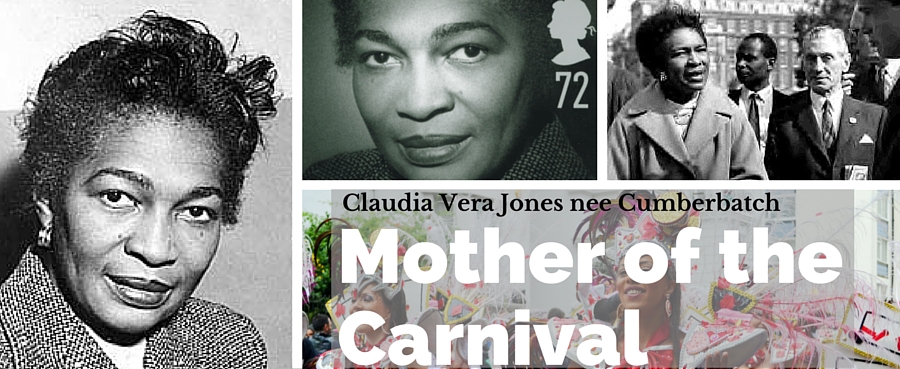
The roots of the Notting Hill Carnival that took shape in the mid-1960s had two separate but connected strands. A "Caribbean Carnival" was held on 30 January 1959 in St Pancras Town Hall as a response to the problematic state of race relations at the time; the UK's first widespread racial attacks, the Notting Hill race riots in which 108 people were charged, had occurred the previous year. The 1959 event, held indoors and televised by the BBC, was organised by the Trinidadian journalist and activist Claudia Jones (often described as "the mother of the Notting Hill Carnival") in her capacity as editor of influential black newspaper The West Indian Gazette, and directed by Edric Connor; showcasing elements of a Caribbean carnival in a cabaret style, it featured among other things the Mighty Terror singing the calypso "Carnival at St Pancras", The Southlanders, Cleo Laine, the Trinidad All Stars and Hi–fi steel bands dance troupe, finishing with a Caribbean Carnival Queen beauty contest and a Grand Finale Jump-Up by West Indians who attended the event.

Another important strand was the "hippie" London Free School-inspired festival in Notting Hill that became the first organised outside event, in August 1966. The prime mover was Rhaune Laslett, who was not aware of the indoor events when she first raised the idea. This festival was a more diverse Notting Hill event to promote cultural unity. A street party for neighbourhood children turned into a carnival procession when Russell Henderson's steel band (who had played at the earlier Claudia Jones events) went on a walkabout. By 1970, "the Notting Hill Carnival consisted of 2 music bands, the Russell Henderson Combo and Selwyn Baptiste's Notting Hill Adventure Playground Steelband and 500 dancing spectators."
Duke Vin, full name Vincent George Forbes, is credited as being a co-founder of Notting Hill Carnival, having brought the first sound system to the United Kingdom in 1955 when he was a stowaway on a ship from Jamaica to the United Kingdom, and brought what is thought to be the very first sound system to the Notting Hill Carnival in 1973, which paved the way for the many sound systems that operate at carnival today. Duke Vin became a legend in Ladbroke Grove and had a huge influence on the popularisation of reggae and ska in Britain, and played at Notting Hill Carnival with his sound system, "Duke Vin the Tickler's", every year from the year it was founded until his death in 2012.
Emslie Horniman's Pleasance (in the Kensal Green district of the area), has been the carnival's traditional starting point. Among the early bands to participate were Ebony Steelband and Metronomes Steelband. As the carnival had no permanent staff and head office, the Mangrove restaurant in Notting Hill, run by another Trinidadian, Frank Crichlow, came to function as an informal communication hub and office address for the carnival's organisers.
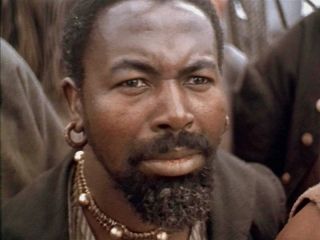
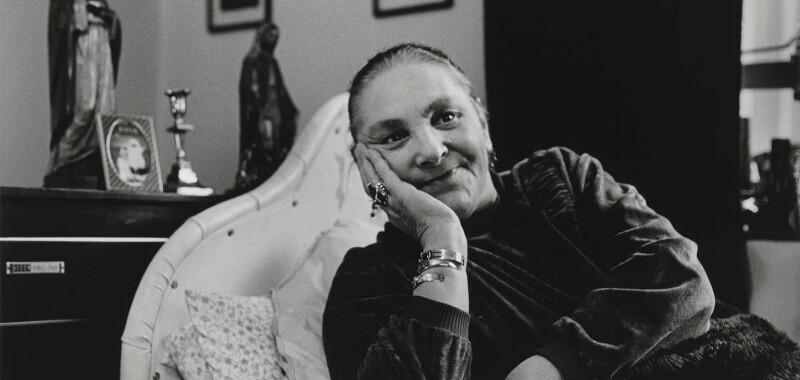
Claudia Jones, Duke Vin the Tickler, Edric Connor, Poster for Blues Dance




Leslie Palmer, who was director from 1973 to 1975, is credited with "getting sponsorship, recruiting more steel bands, reggae groups and sound systems, introducing generators and extending the route.” He encouraged traditional masquerade, and for the first time in 1973 costume bands and steel bands from the various islands took part in the street parade, alongside the introduction of stationary sound systems, as distinct from those on moving floats, which, as Alex Pascall has explained, "created the bridge between the two cultures of carnival, reggae and calypso." "Notting Hill Carnival became a major festival in 1975 when it was organised by a young teacher, Leslie Palmer." The carnival was also popularised by live radio broadcasts by Pascall on his daily Black Londoners programme for BBC Radio London.
By 1976, the event had become definitely Caribbean in flavour, with around 150,000 people attending. However, in that year and several subsequent years, the carnival was marred by riots, in which predominantly Caribbean youths fought with police – a target due to the continuous harassment the population felt they were under. During this period, there was considerable press coverage of the disorder, which some felt took an unfairly negative and one-sided view of the carnival. For a while it looked as if the event would be banned. Prince Charles was one of the few establishment figures who supported the event. Leila Hassan campaigned for Arts Council England to recognise the Notting Hill Carnival as an art form. Since 1978 the national Panorama competition is held on the Saturday preceding the carnival.
Concerns about the size of the event resulted in London's then mayor, Ken Livingstone, setting up a Carnival Review Group to look into "formulating guidelines to safeguard the future of the Carnival". An interim report by the review resulted in a change to the route in 2002. When the full report was published in 2004, it recommended that Hyde Park be used as a "savannah" (an open space to draw crowds away from residential areas), though the proposal of such a move attracted concerns, including that the Hyde Park event might overshadow the original street carnival.


In 2003, the Notting Hill Carnival was run by a limited company, the Notting Hill Carnival Trust Ltd. A report by the London Development Agency on the 2002 Carnival estimated that the event contributed around £93 million to the London and UK economy, set against an estimated £6–10 million costs. However, the 2016 residents' survey commissioned by local Conservative Member of Parliament (MP) Victoria Borwick found that while 6% of businesses reported an upturn in trade, many others boarded up their shopfronts and lost business due to closure.
For 2014, a Notting Hill Carnival illustrated guide was created by official city guide to London visitlondon.com. The infographic includes Carnival tips, transport information and a route map. The book Carnival: A Photographic and Testimonial History of the Notting Hill Carnival, by Ishmahil Blagrove and Margaret Busby, was also published in August 2014 by Rice N Peas.
In 2015 there was controversy when the Carnival Trust charged journalists £100 to cover the event, and demanded copies of all work produced relating to the event within three weeks of the end of the Carnival. The National Union of Journalists organised a boycott of the event. In 2016 the charge remained; however, in June 2017, the Carnival's new event management team introduced a revised media policy, with no request for any accreditation fees.



In 2016, when the Golden Jubilee of Notting Hill Carnival was celebrated, 42 hours of live video coverage was broadcast by music live-streaming platform Boiler Room from the Rampage, Deviation, Aba Shanti-I, Channel One, Nasty Love, Saxon Sound, King Tubbys, Gladdy Wax and Disya Jeneration soundsystems.]
The 2020 carnival was cancelled due to the ongoing COVID-19 pandemic, although free live-streamed events were shown online across four channels. On 18 June 2021, it was announced that the 2021 Carnival would not take place either, due to "ongoing uncertainty and Covid-19 risk”.
In 2022, Notting Hill Carnival returned after two-year hiatus. It started with a run to remember 72 victims of the Grenfell Tower fire from 2017.