January 9th: Today’s Feature - Amy Barbour-James
- Jan 9
- 2 min read
January
Amy Barbour-James (25 January 1906 – 4 May 1988) was a British-born Guyanese Black civil rights activist and civil servant.
Early Life and Family
Caroline Amy Aileen Barbour-James was born in Acton, London, on 25 January 1906 to Guyanese parents, John and Caroline Barbour-James, one of their eight children. The Barbour-James family were a middle-class family who lived in west London in the early 20th century. Her father, John Barbour-James, worked as administrator in West Africa and had access to a large network of contacts throughout the continent. In 1918, he founded the African Patriotic Intelligence Bureau.



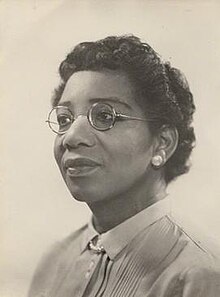


From 1902 to 1917, John worked at the post office in the Gold Coast (now Ghana), while his wife Caroline and their five children lived in London. During his time in Ghana, John took occasional leaves to be with his family.
After retiring at the age of 50 in 1917, he became involved in black affairs in England for over twenty years. Sadly, Caroline passed away, and John remarried a Barbados-born school teacher named Edith Rita Goring in 1920.
Their social circle included West Africans, Caribbeans, and Harold Moody, a Jamaican-born doctor who founded the League of Coloured Peoples in London in 1931. Dr. Moody was a remarkable man, known for his Christian work, large family, and medical qualifications. He also ran a medical centre in southeast London.

Activism
Inspired by her father, Barbour-James became active in the civil rights movements and was involved in the African Progress Union and the League of Coloured Peoples, becoming secretary of the latter organisation in 1942.
Dr. Moody's letter to Miss Barbour-James mentioned a person named 'Carter', who was actually John Carter from British Guiana. Carter was a law student in London from 1939 to 1942 and played a significant role in the League. He helped resolve numerous incidents of racial discrimination, particularly those involving black American troops who arrived in large numbers that year.
Carter's legal skills were instrumental in addressing these incidents, which were often violent and perpetrated by white GIs. In 1945, he returned to Georgetown and later became Sir John Carter in 1966. He represented Guyana in various countries, including the U.S., Canada, the U.N., and Britain in 1970. The letter also mentions 'Constantine', a Trinidad cricketer who settled in northwest England in the 1930s.
Learie Constantine, who also became a lawyer and was knighted, took over as the head of the League after Dr. Moody's death in 1947. However, without the presence and contributions of Moody and his colleagues, the League gradually lost its vitality and eventually ceased to exist.


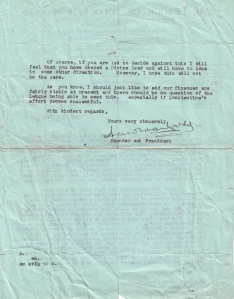
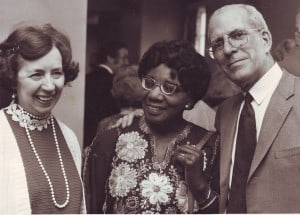
Miss Barbour-James held the letter in high regard, cherishing it dearly. After her passing, the letter was discovered in her residence at 57 Christchurch Avenue, Kenton, Middx (sic), having been safeguarded for four decades within a plastic sleeve.
In 2011, a short drama based on Barbour-James's life was broadcast by BBC Radio 4.
Death
Barbour-James died in Harrow on 4 May 1988, aged 82.