January 11th: Today’s Feature - William Davidson, Social Welfare Reformer & Abolitionist
- Jan 11
- 3 min read
January
William Davidson, born in Kingston, Jamaica in 1781, shared a common background with Robert Wedderburn as the illegitimate sons of wealthy white men and Black slave mothers. Despite their challenging beginnings, both men went on to make significant contributions to the abolitionist movement in England.
After migrating to England, Wedderburn and Davidson became passionate advocates for the abolition of slavery. They joined underground movements that aligned with Thomas Spence's radical ideology, which called for common land ownership, universal suffrage, and social welfare reforms such as a guaranteed income for those unable to work and the protection of children's rights.

William Davidson, pursued a diverse range of interests throughout his life. He initially studied law in Glasgow, Scotland, and mathematics at Aberdeen. However, he eventually abandoned both fields to pursue a career as a sailor. Davidson's life took a different turn when he married and started a cabinet making business in London. Unfortunately, his business venture did not succeed, leading him to explore other avenues for social change.
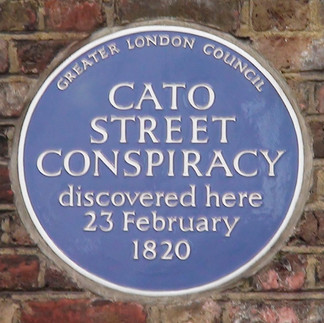
Davidson's involvement in the radical underground movement began when he joined the Marylebone Reading Society, a group dedicated to parliamentary reform. This affiliation eventually led him to become a member of the Spencean Philanthropists in London. It was through his connection with Arthur Thistlewood, another prominent figure in the movement, that Davidson became one of the five planners involved in the infamous Cato Street Conspiracy.
The plot aimed to assassinate government cabinet officers during a dinner at the Earl of Harrowby's house in Grosvenor Square. However, unbeknownst to Davidson and his fellow conspirators, the dinner was a setup orchestrated by a government agent provocateur named George Edwards.
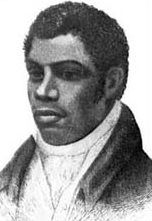


Davidson met his tragic fate when he was executed for his involvement in the conspiracy. Despite the tragic end to his life, William Davidson's involvement in the abolitionist movement and his participation in the Cato Street Conspiracy serve as a testament to his unwavering commitment to social justice and his willingness to take bold actions in pursuit of a better world.
Davidson, a key figure in the conspiracy, was apprehended during a police raid at the Cato Street loft where the group of conspirators regularly convened. Stripped of his revolver and taken into custody, he faced the weighty charge of high treason alongside his co-conspirators James Ings, Richard Tidd, Arthur Thistlewood, and John Brunt. Following a trial, all five men were found guilty and condemned to death.




On that fateful day, May 1, 1820, Davidson met his fate on the gallows, becoming the last British citizen to suffer decapitation. As he stood on the Newgate Prison gallows in London, he delivered a poignant and historically significant speech. Reflecting on the timeless struggle against tyranny, he invoked the age-old tradition of resisting oppression. Drawing from the annals of English history, Davidson reminded the crowd that when previous monarchs attempted to infringe upon the rights of the people, they armed themselves and made it clear that they would not surrender their privileges as Englishmen without a fight.
In a stirring appeal, Davidson questioned whether it was preferable to govern a nation of courageous and spirited individuals or a nation of cowards. He acknowledged the inevitability of his own death, emphasising that he could only die once in this world. However, his thoughts turned to his beloved family, particularly his numerous young children, and the regret he felt at leaving them behind. The weight of this consideration momentarily overwhelmed him, causing him to momentarily lose composure and reveal his vulnerability.





His final address on the gallows of Newgate Prison in London formed a significant part of his historic last speech.
“It is an ancient custom to resist tyranny... And our history goes on further to say, that when another of their Majesties the Kings of England tried to infringe upon those rights, the people armed, and told him that if he did not give them the privileges of Englishmen, they would compel him by the point of the sword... Would you not rather govern a country of spirited men, than cowards? I can die but once in this world, and the only regret left is, that I have a large family of small children, and when I think of that, it unmans me."