January 12th: Today’s Feature - Robert Wedderburn, Unitarian Preacher & Anti-Slavery Advocate
- Jan 12
- 4 min read
January
Robert Wedderburn (1762 – 1835/1836?) was a Jamaican-born political and religious radical and also an associate of Richard Carlile, who himself experienced the oppressive suppression of free speech in early 19th century England.
Wedderburn actively voiced his opposition to superstition and the enforcement of religion through law, instead advocating for the importance of free inquiry and the ability of individuals with diverse ideas and beliefs to coexist harmoniously. Additionally, he played a significant role in spreading anti-slavery sentiments among his peers in London.
Wedderburn, along with others who shared his beliefs, contributed to the development of a humanist tradition characterised by rationalism, compassion, and tolerance, all while enduring the consequences of blasphemy laws that humanists still strive to combat today.

Hailing from the city of Kingston, Jamaica, in the year 1762, Robert Wedderburn's extraordinary upbringing was shaped by the union of an African-born enslaved mother and a Scottish sugar planter father. Despite his fortunate emancipation from birth, he encountered numerous obstacles along his path, eventually finding solace in the bustling streets of London, where he honed his skills as a master tailor. Imbued with the spirit of the city's proletariat radicalism, Wedderburn wholeheartedly embraced the Spencean Philanthropist Society, tirelessly advocating for the noble causes of social reform and universal equality.
Embracing the dawning of the 19th century, Wedderburn embarked upon a transformative journey, assuming the esteemed mantle of a licensed Unitarian preacher. In the heart of Soho, he erected a chapel that swiftly evolved into a haven for intellectual discourse and revolutionary ideas. However, his unyielding outspokenness proved to be a double-edged sword, leading to his unjust arrest in 1820 on charges of blasphemous libel.
Unfazed by this adversity, Wedderburn fearlessly employed his profound comprehension of Christian teachings to challenge his accusers, daring to question the very notion of blasphemy when it pertains to an enigmatic and unfathomable entity.


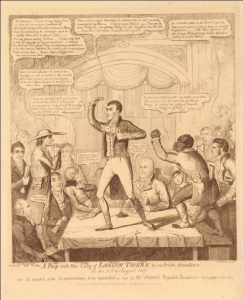


Wedderburn, in his astute analysis, juxtaposed the archaic blasphemy laws with the ever-evolving landscape of human knowledge and civilization. He eloquently pointed out that many laws of yesteryears, now deemed absurd and inhumane, have become obsolete in the enlightened era they found themselves in:
“Tyrannical and intolerant laws may exist and be enforced in times of darkness and ignorance, but they will be of little effect when once the human mind is emancipated from the trammels of superstition.”
With this profound understanding of progress, Wedderburn vehemently opposed the notion of Christianity being an integral part of the legal system, which led to the unjust prosecution and imprisonment of those who dared to voice their dissent. He implored the judges to transcend the confines of tradition and instead rely on their own faculties of reason and justice to pass judgment.

“I trust that you will not suffer yourselves to be ensnared by that sophistical mode of reasoning which makes me guilty of a crime, merely, because I have offended against opinions or laws originating in times still more bigotted and superstitious than the present.”
However, in May 1820, Wedderburn received a two-year sentence in Dorchester Jail, where he served alongside Richard Carlile. Four years later, in 1824, Wedderburn released The Horrors of Slavery, which received a positive response from the artisan class, showcasing their support for the abolitionist cause.
In the early 1830s, Wedderburn traveled back to America but returned to London by 1834, where he was seen among a crowd gathered to listen to the 'infidel preacher' Robert Taylor. Although the exact date of Wedderburn's death is unknown, it is believed to have occurred within the following two years.
Influence
“Every age and country furnish us with proofs, that it is possible for persons of opposite opinions to live in harmony together, and with abundant testimonies that people entertaining the greatest diversity of tenets have been alike husbands, fathers, children, and citizens.”
Robert Wedderburn
Robert Wedderburn embodies the radicalism of the early 19th century, emphasising the values of independent thinking, freedom of expression, and unrestricted media. Through his personal experience with slavery and his writings advocating for its abolition, he showcases the politically engaged working class's diverse range of causes and their compassion towards them. They recognised the similarities between their own mistreatment by the ruling classes and the suffering endured by the enslaved.

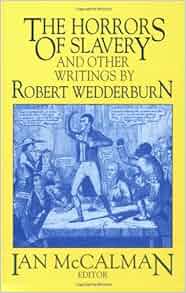


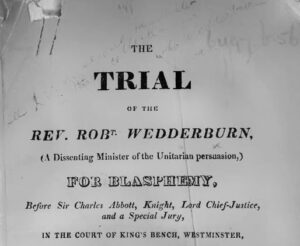
These efforts to secure basic human rights for all, combined with the contributions of the radical activists involved, form a significant chapter in the history of progressive secularism and humanism in the United Kingdom. Furthermore, they continue to serve as the basis for the ongoing work of Humanists UK today.
Death & Legacy
The exact year of his passing remains unknown, but it is believed to have occurred before official death records were kept in 1837. One possibility is that he is the "Robert Wedderborn" who passed away at the age of 72 in Bethnal Green and was laid to rest in a non-conformist ceremony on January 4, 1835.
Wedderburn's deism, radicalism, and secularism have been situated within the context of British humanism by some. Those influenced by his writings highlight that Wedderburn and others like him nurtured a humanist tradition characterised by rationality, compassion, and tolerance, enduring the consequences of blasphemy laws that humanists still strive against today.



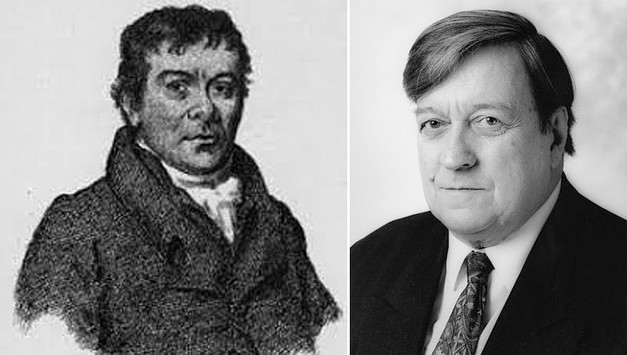
Descendants
The British Labour politician Bill Wedderburn, Baron Wedderburn of Charlton, was a direct descendant of Robert Wedderburn.