January 16th: Today's Feature - Helen Wilson-Roe, Artist
- Jan 16
- 4 min read
January
Helen Wilson-Roe, a talented Black artist hailing from Bristol, possesses a diverse range of artistic skills including sculpture, painting, installation making, and documentary filmmaking. Her artistic practice delves into the profound themes of Racism-Exploitation-Genocide-Bristol and the Transatlantic Traffic in Enslaved Africans, shedding light on the historical and contemporary struggles faced by marginalised communities. By exploring these subjects, Helen aims to amplify the voices and stories of disenfranchised and culturally diverse communities that are often overlooked in mainstream art spaces, despite their universal significance.
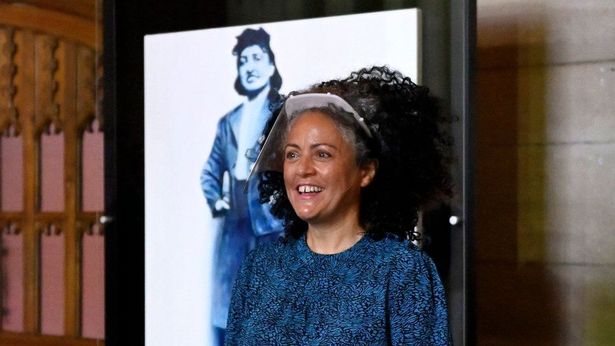
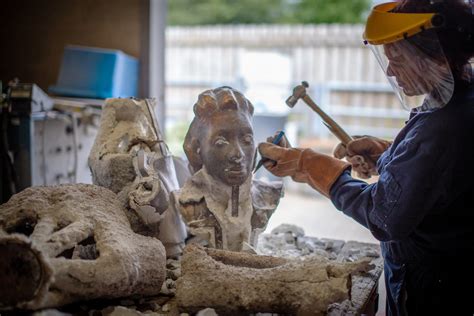
In a groundbreaking achievement, Helen created a life-size bronze statue of Henrietta Lacks, which was unveiled at the University of Bristol in 2021. This remarkable sculpture holds the distinction of being the first public statue of a Black woman in the UK that was both made by and dedicated to a Black woman. The statue stands as a powerful symbol of representation and recognition, celebrating the contributions and experiences of Black women in British society.



Helen's artistic journey took her to Rwanda in 2002, where she felt a profound calling to bear witness to the aftermath of the devastating 1994 genocide. During her time in Rwanda, Helen met with survivors and visited massacre sites, immersing herself in the stories and experiences of the Rwandan people. Deeply moved by their narratives, Helen felt an immense responsibility to accurately and sensitively depict their stories through her art.
Over the course of ten years, she meticulously researched the genocide and dedicated a year to completing thirteen poignant paintings that captured the essence of the tragedy. These powerful artworks were exhibited at prestigious venues such as the Bristol Museum Art Gallery and the Birmingham Museum before being gifted to the Rwandan Embassy in London, serving as a testament to the resilience and strength of the Rwandan people.
This exhibition is centred around a remarkable collaboration between art and science, showcasing the documentary "A Brush with Immortality" by Helen. The documentary tells the story of Henrietta Lacks, her family, and her significant contribution to medical science even after her death.


Despite pharmaceutical companies profiting from the use of HeLa cells, the Lacks family has faced challenges in accessing basic healthcare and remained unaware of Henrietta's contribution for a staggering twenty years.
Helen's interest in and research on this story spans over 26 years. It all began in 1997 when she came across an article in The Sunday Times Magazine and watched the BBC documentary "The Way of All Flesh" by renowned British director Adam Curtis.
In 2010, Helen had the opportunity to meet 24 members of the Lacks family. This encounter marked the beginning of a collaboration aimed at bringing visibility to the woman who unknowingly made an incredible impact on medical history. Through a series of vibrant portraits, Helen's mission is to raise public awareness about Henrietta, her children, and her grandchildren. By doing so, Helen aims to shed light on the injustices that the Lacks family has endured over the years following the exploitation of HeLa cells by the medical community.



The documentary and exhibition offer valuable and uplifting insights into the fascinating history of Henrietta Lacks, shedding light on the challenges faced by her family, the significant contributions of HeLa cells to medical science, the collaborative relationship between science and art in promoting public understanding of research, and the complex ethical issues surrounding tissue donation and anonymity. It showcases Helen's interviews with the Lacks family members, skilfully interwoven with scientific perspectives shared by cell biologists from the University of Bristol.
Following her visit to America and meeting with the Lacks family, Helen was commissioned to create an installation that was later displayed at the Science Museum in London. However, the commission only covered the cost of the installation itself, highlighting the financial limitations faced by artists.


In 2018, Helen took her artistic endeavours further by exhibiting six glass panel installations centred around Henrietta Lacks, her cells, and her family at the Arnolfini in Bristol. This exhibition aimed to delve deeper into the story and impact of Henrietta Lacks, providing a platform for reflection and awareness.
Helen's personal mission is to complete a series of 24 portraits depicting the Lacks family and gift them to the family, ensuring that they have full control over their own legacy. This dedication showcases Helen's commitment to honouring and preserving the memory of the Lacks family.
Notably, Helen painted a portrait of Cleo Lake, who served as the first Black female Mayor of Bristol from 2018 to 2019. This portrait replaced a previous depiction of Lord Nugent, a figure associated with the Bristol slave trade, in the Lord Mayor's chamber at City Hall in Bristol. This act symbolises the recognition and celebration of Black achievements and contributions, while also acknowledging and challenging the problematic history associated with the city.


Helen's artistic achievements have garnered recognition and acclaim, as she was proudly included in the "19 Black women who have made a difference" Awards list in both 2019 and 2020. Additionally, her artwork has been incorporated into the school curriculum of Black Bristolians Pack/Bristol one Curriculum, further amplifying her impact and influence in educating and inspiring future generations.