January 19th: Today's Feature - James Samuel Risien Russell, Neurologist & Esteemed Professor
- Jan 19
- 4 min read
January
James Samuel Risien Russell, (1863 – 1939) a prominent neurologist and esteemed professor, holds a significant place in the medical history of Britain. Often, the narrative of Black physicians in the country begins with the Windrush migration after World War II, but it is crucial to acknowledge the pioneering contributions of earlier West Indian doctors like Russell.
Early Life & Education
Born in Demerara, British Guiana (now Guyana), Russell had a Scottish father and a mother of African descent. His father, who migrated to Demerara in 1847, achieved great wealth through his sugar plantations, while the history of his mother remains unknown.
Russell received his education in Scotland and pursued medicine and surgery at Edinburgh University from 1882 to 1886. His exceptional academic prowess led to the award of the gold medal for outstanding achievement in his Edinburgh Doctorate of Medicine in 1893.

Following his postgraduate medical training at St Thomas' Hospital in London, Russell was granted the opportunity to study in Berlin and Paris in 1895. During his time in Paris, he focused on studying nervous diseases under the guidance of Jean-Martin Charcot at the renowned Salpêtrière Hospital.
Career
Russell's career took him to various hospitals and institutions throughout his early years. He worked at Nottingham General Hospital and the Metropolitan Hospital in London after returning from studying abroad.
During this time, he also had the opportunity to work in the research laboratory of renowned neurosurgeon Sir Victor Horsley at University College London. In 1898, Russell was appointed as a resident medical officer at the National Hospital Queen Square, where his research focused on the cerebellum and subacute combined degeneration of the spinal cord.
Despite his success in research, Russell eventually shifted his focus to practice and teaching. As a professor of clinical medicine at UCL, he was known for his exceptional teaching skills and preference for clinical demonstrations. Russell's interest in teaching is evident through his contributions to various medical publications.

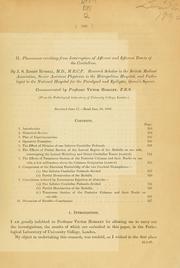


In 1900, he was appointed as a consulting physician of neurology at the National Hospital and also became a member of the management board. Additionally, he took on the role of professor of medical jurisprudence, applying medical knowledge to legal situations.
Russell's career took off with his appointments at the UCL and the National Hospital, leading him to establish his own practice in the heart of London's private medical district. Specialising in mental disorders, he treated a significant number of chronic psychotics and psycho-neurotics, including notable figures like Sir Henry Stanley and Mrs Humphry Ward.
However, despite his success, the medical profession during the early 20th century was not free from racial prejudice. Reminiscences and later biographies reveal offensive remarks and racial slurs directed at Russell, highlighting the unfortunate reality of discrimination.

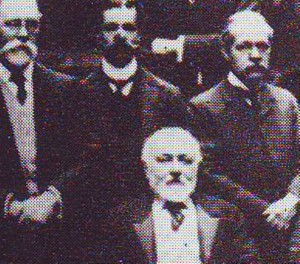


Even though his ethnicity was omitted from obituaries, accounts from his peers and later sources made derogatory comments about his appearance and mixed racial background. Despite facing such prejudice, Russell served as a Captain in the Royal Army Medical Corps during the First World War, a remarkable achievement considering the War Office's hostility towards Black doctors.
Russell's wartime career may have been impacted by racism within the War Office, but he persevered as a consultant at the National Hospital, where he treated soldiers suffering from shellshock. After the war, he dedicated himself to advocating for reforms in lunacy laws and fought to prevent individuals with less severe mental health issues from being institutionalised. In 1924, he became the Chairman of the National Society for Lunacy Reform and also served as an expert witness in court cases involving psychiatric considerations. Finally, in 1928, after a successful 30-year career, Russell retired from the National Hospital.





Throughout his life, Russell gained recognition and respect as a prominent physician. He achieved consultant status and built a thriving private practice. His success allowed him to indulge in a luxurious lifestyle, being chauffeured around town in his Rolls Royce, collecting fine art, and hosting elegant dinner parties accompanied by a small orchestra.
Russell's beliefs often clashed with those of other psychiatrists. He firmly believed that patients with psychosis should not be hastily committed to asylums, but rather receive care within their own families with support from general practitioners. Additionally, he disapproved of the newfound freedoms of the "modern girl," claiming that it rendered them unfit for motherhood and the responsibilities of married life.
Personal Life
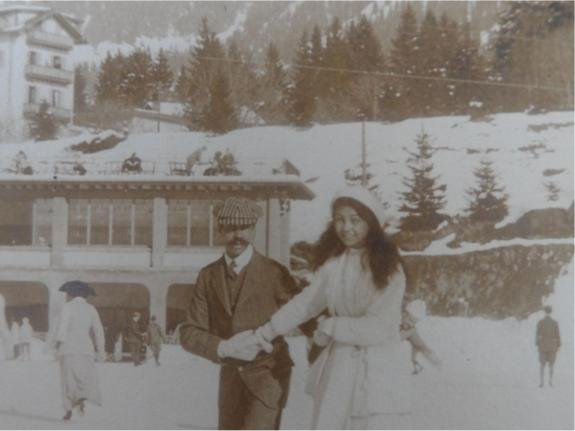
In terms of his personal life, Russell married Ada Gwenllian Michell in 1892, and they had a daughter named Marjory Gwenllian Russell in 1893. However, their marriage ended in divorce after a scandalous report in The Times revealed that Russell had spent a night with an unidentified woman at a hotel. This incident led to his resignation from University College Hospital and his clubs, as well as a decline in female patients seeking his services. In 1924, Russell remarried Ada Clement, the widow of a Lancashire JP, and many of his private practice patients came from London's high society.



Commemoration
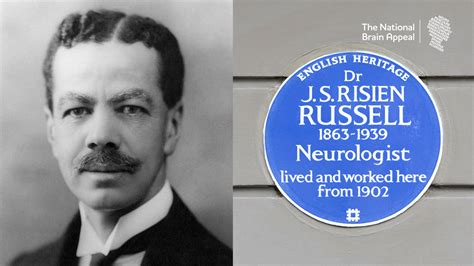
In 2021, English Heritage honoured the memory of Dr James Russell, one of Britain's pioneering Black consultant physicians by unveiling a blue plaque at 44 Wimpole Street in Marylebone, London. This plaque commemorates the site where he resided and conducted his private practice from 1902 until his passing in 1939. Sadly, he died in his consulting rooms at the age of 75, between appointments.
Thanks to the efforts of the Windrush Foundation and medical historians, his remarkable life and groundbreaking medical contributions have gained greater recognition in recent times.