February 3rd: Today’s Feature
- webbworks333
- Feb 3, 2025
- 3 min read
February
Franklyn DaCosta Stephenson (born 8 April 1959) is a former cricketer from Barbados who played as a right handed batsman and pacer. Stephenson played as an allrounder for his native Barbados together with Tasmania, Orange Free State, Gloucestershire, Nottinghamshire and Sussex in his cricketing career. As an aggressive middle-order batsman and genuinely quick pacer, he was also known for being one of the greatest exponents of the slower ball.

Playing Career
Stephenson played for the West Indies Young Cricketers team on their 1979 English tour. During 1981 he made his first-class debut, playing for Tasmania. He also started to feature, in that year, for his native Barbados and English side Gloucestershire.
During the following winter, Stephenson joined a rebel West Indies team, led by Lawrence Rowe, that twice toured South Africa. This team featured players such as Alvin Kallicharran, Collis King, Colin Croft and Ezra Moseley.
The West Indian rebels played in unofficial Tests and ODIs against the South African national cricket team who, due to apartheid, were at the time barred from world cricket. The rebel West Indian cricketers were later handed a lifetime ban from playing cricket by the WICB.
After those rebel tours came to an end, he began playing for South African outfit Free State. As the lifetime ban was eventually lifted in 1989, Stephenson was able to play for Barbados in the 1989–90 Red Stripe Cup. Stephenson though never went on to play international cricket. He is regarded by some cricketing aficionados as one of if not the greatest cricketer who never played for the West Indies.
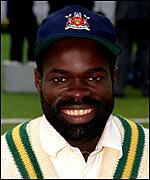

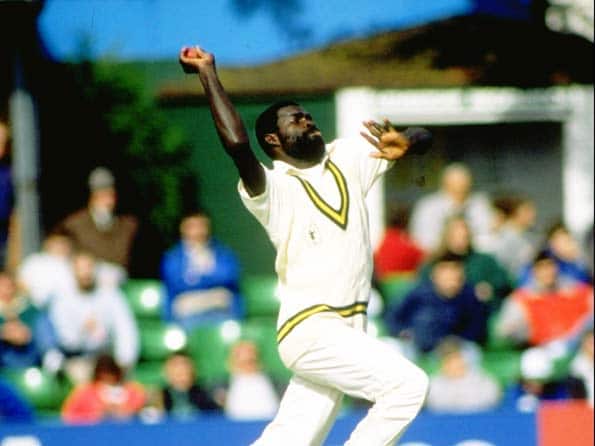
Stephenson then joined Nottinghamshire in 1988. With county cricket sides having now only one overseas player, Stephenson came to the club as a replacement for fellow all-rounders Clive Rice and Richard Hadlee. Stephenson impressed in his debut season at Notts, in achieving the all-rounder's "double" of 1,000 runs and 100 wickets.
He became only the second and last cricketer since Richard Hadlee, to achieve this feat, in making 1018 runs and taking 125 wickets. He was thereafter named a Wisden Cricketer of the Year in 1989 for this achievement, and was also the Cricket Society's leading all-rounder.


Stephenson's attained the batting aspect of the double by notching a century in each innings against Yorkshire in Notts final match of the season. He also took 11 wickets in the game, which Nottinghamshire eventually lost.
Stephenson continued as an effective all-rounder for further three seasons with Nottinghamshire. He eventually left Notts to join Sussex, where he played for another four seasons. During 1994, he scored over 750 runs and claimed a total of 67 wickets for that club.
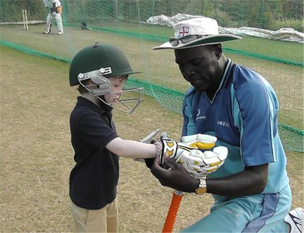


Following his retirement from English county cricket in 1995 and South African domestic cricket after the 1996-97 season, Stephenson's remarkable all-round performances and skillful execution of slower balls continued to earn him widespread recognition. His prowess was evident in both the First Class and List A formats of the game, solidifying his reputation as a formidable player.
Stephenson's ability to adapt his bowling technique and deliver slower balls with precision added an extra dimension to his game, making him a force to be reckoned with on the cricket field.
Life after Cricket
Nestled within the serene private estate of Cockade House in Bennetts, St. Thomas, lies the prestigious Franklyn Stephenson Academy. This state-of-the-art training facility, situated on the picturesque island of Barbados, is the brainchild of the remarkable Franklyn DaCosta Stephenson.


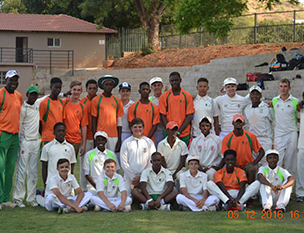
With his remarkable background as a record-breaking professional cricketer and a current golf professional, Stephenson's vision for this academy is to nurture and develop the next generation of Cricketing talent. The academy's idyllic location and Stephenson's expertise make it a haven for aspiring young cricketers seeking to hone their skills and reach new heights in their respective passion for the game.
The ultimate goal of the Academy is to ignite a deep love for the game and equip players with the skills to succeed not just in cricket, but also in all aspects of life. Through the Academy program, Stephenson also aims to shape individuals who will go on to make meaningful contributions to society, creating a positive impact that extends far beyond the boundaries of the cricket field.