February 6th: Today’s Feature - Peter Foley, Footballer
- Feb 6
- 3 min read
February
Peter Foley
Born in Edinburgh on 28th June 1944, Peter Foley was the child of of a white mother and a black Ghanaian father. In the 1960s, when racial diversity in League football was scarce, Peter stood out as one of the very few black players. He made history as the first black player at Workington Reds, Chesterfield, and Scunthorpe, all of which were Football League clubs at the time. His groundbreaking achievements will be highlighted in the upcoming documentary, "Football's Black Pioneers," where he will be recognised as Scunthorpe's trailblazing black player.


Unfortunately, Peter's journey was marred by racial discrimination. On the 5th of April 1965, Peter experienced his first encounter with racist abuse during a football match. It was while he was playing for Workington at Queen's Park Rangers' Loftus Road stadium. Despite the relatively small crowd of 4,642 spectators, Peter vividly remembers hearing the chants of "Zulu, Zulu, Zulu" during the warm-up. As the only black player on the field, he quickly realised that these derogatory chants were directed towards him.


At the tender age of 20, Peter was deeply affected by this incident. The impact was so traumatic that when he discovered that the first game of the following season would be an away match against Millwall in London, he became extremely apprehensive about the potential abuse he might face. Considering the notorious reputation of the Millwall crowd, Peter decided to feign injury in order to avoid traveling to the capital.
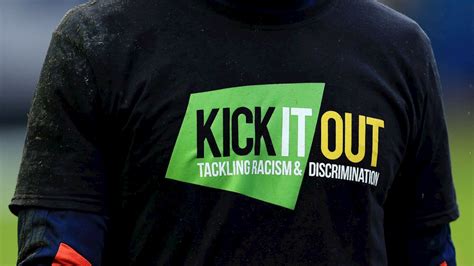
This particular moment in Peter's life was a turning point for him. He recognised that he had let himself and his team down by succumbing to the racists' intimidation. From that point forward, he made a firm commitment to never again pretend to be injured and to confront racism head-on wherever he encountered it. His determination to combat racism is evident in his receipt of an MBE in 2003, which recognised his significant contributions to anti- racism efforts through his involvement in the Trade Union and the Let's Kick Racism Out of Football campaign.



During the 60’s, the number of Black footballers in the UK was extremely low, and could be counted on just one hand.
Foley played as a forward for Workington, showcasing his skills in over 80 games and scoring an impressive 16 goals for the club. He
then moved on to Scunthorpe, where he held off a young Kevin Keegan from the team for a couple of years.

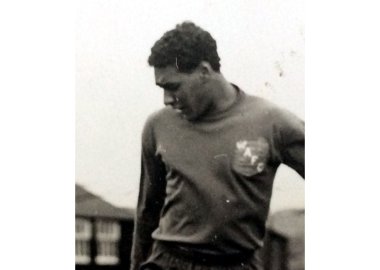


Foley's contributions to the sport extended beyond the field, as he became an ambassador for racial equality in football. His dedication and efforts were recognised when he received an Order of the British Empire for his work.
In an interview with the Independent, Foley shared a heartbreaking incident that highlighted the harsh realities of racism during his playing years. He recalled a match where he faced relentless abuse from a spectator, leading the referee to intervene and have the offender removed from the ground. Despite this action, the referee never addressed the issue with Foley directly.
What made the situation even more distressing was witnessing fans hurling racist insults while their young children sat beside them. Foley understood that this cycle of racism would continue if not addressed, emphasising the importance of his advocacy for racial equality in football.
Peter Foley, Cumbria's pioneering black footballer, continues to reside in west Cumbria and remains dedicated to raising awareness about the detrimental impact of racism. In a recent statement, Peter expressed his concern over the escalating severity of racism within the game.
As one of the few black players during his professional career, he reveals that he never had the opportunity to compete alongside another black player on the field. Despite this, Peter's unwavering commitment to combating racism persists, as he strives to educate people about its destructive consequences.