February 19th: Today’s Feature
- webbworks333
- Feb 19, 2025
- 5 min read
February
Laurence Paul Cunningham (8 March 1956 – 15 July 1989) was an English professional footballer. A left winger, he notably played in England, France, and Spain, where he became the first-ever British player to sign for Real Madrid.
Life and Career
Born in Archway, London, Laurie Cunningham was the son of a former Jamaican race-horse jockey. Cunningham started in schoolboy football and was turned down by Arsenal before joining Leyton Orient in 1974.

Laurie Cunningham spent a significant period of three years in east London before making a name for himself on the international platform, representing his country and playing for two of the most renowned clubs in the world.
Unfortunately, his life was tragically cut short 15 years after he initially signed his contract with Orient. Despite this heartbreaking turn of events, his legacy continues to thrive due to the profound impact he made in the world of football.
He joined West Bromwich Albion in 1977, where, under manager Johnny Giles, he teamed up with another black player, Cyrille Regis, and the following year under Ron Atkinson, with Brendon Batson. This was the second time an English top-flight team simultaneously fielded three black players (the first being Clyde Best, Clive Charles and Ade Coker for West Ham United against Tottenham Hotspur in April 1972) and Atkinson collectively referred to Cunningham, Batson and Regis as "The Three Degrees" after the U.S. soul singing trio.
West Bromwich Albion emerged as a captivating English team during the late 1970s, and Cunningham quickly caught the eye of many. His exceptional skills and talent led him to become the first black player to don the England shirt at any level during the friendly match between England under-21s and Scotland at Bramall Lane on 27 April 1977. Remarkably, he even managed to score on his debut, leaving a lasting impression on the footballing world.


Following his impressive performance, Cunningham's journey continued to flourish as he earned a well-deserved opportunity to represent England at the highest level. His full England cap debut took place in a Home International match against Wales in 1979, where he showcased his immense abilities on the field.
Throughout his international career, he went on to accumulate a total of six caps for England, solidifying his place as a valued member of the national team. Cunningham's achievements not only broke barriers but also paved the way for future generations of black players to excel in the sport.


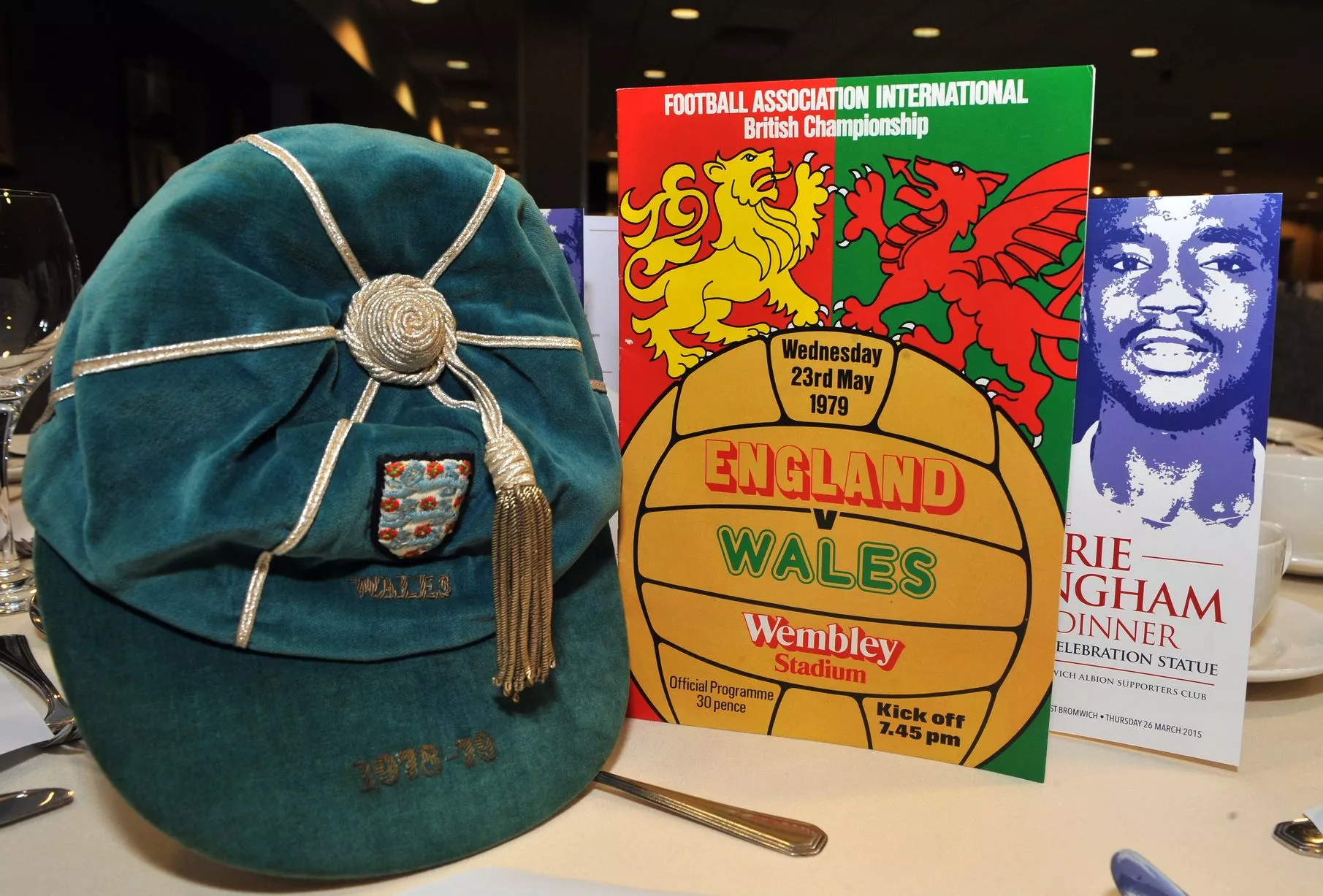
Laurie Cunningham's legacy extends far beyond the football pitch, as he left an indelible mark on the sport and society as a whole. From his early days playing in London to his time in Leicester, Manchester, and even Madrid, Cunningham faced the harsh reality of racism head-on. In an era when prejudice was rampant in football stadiums, he fearlessly confronted the challenges that came his way.
Despite facing unprecedented provocation and abhorrent abuse, Cunningham's determination and talent propelled him to achieve remarkable feats. He etched his name in history by lifting The FA Cup and becoming the first British player to don the famous white jersey of Real Madrid. Moreover, he shattered barriers by becoming the first black player to represent England at the Under-21 level. His achievements on the field were not only a testament to his skill but also a powerful statement against discrimination.


Cyrille Regis, a close friend and former teammate of Cunningham's during their time at West Bromwich Albion, spoke highly of his impact on the world of football. Regis vividly recalled the first time he witnessed Cunningham's talent as a young teenager playing for Leyton Orient. Even then, Regis recognized the potential in him, predicting that he would become a good footballer. However, Cunningham surpassed all expectations and emerged as a truly exceptional player.
Laurie Cunningham's time at Real Madrid, where he joined in 1979 and stayed for five years, is a period that many people fondly remember. However, it was his involvement in the famous 'Crazy Gang of Wimbledon' and their remarkable journey to FA Cup glory in 1988 that will also be etched in the memories of fans.


Nevertheless, it can be argued that Cunningham made his most significant impact during his tenure at West Brom. In 1977, he joined the Baggies and formed a formidable partnership with fellow black player, Regis. The following year, Brendon Batson also signed for the team, and the trio became known as 'The Three Degrees,' a reference to the legendary US soul singers.
Beyond their jovial nickname, Cunningham, Regis, and Batson were instrumental in challenging racial attitudes in football. At the time, only Tottenham Hotspur and West Ham United had previously fielded three black players in their starting lineups. The trio not only excelled on the pitch but also served as role models, fearlessly confronting the adversity they faced.


In 1988, Cunningham returned to Spain to play for Rayo Vallecano. Tragically, a year later, while still in Madrid, he was involved in a fatal car accident. Cunningham was killed in the crash on the morning of 15 July 1989, at the age of 33. He was survived by his wife and their son.
However, by that time, his legacy had already been firmly established. As Regis attested, Cunningham was not only one of the greatest players of his generation but also a trailblazer for black and minority ethnic footballers. His impact on the game will never be forgotten, and his memory will endure as a testament to his exceptional talent and the barriers he helped break down. Laurie Cunningham, will always be remembered as a truly remarkable player and, forever 33.


Legacy
In November 2004, he was named as one of West Bromwich Albion's 16 greatest players, in a poll organised as part of the club's 125th anniversary celebrations. The club announced that Cunningham would feature in a mural of the former players to be displayed at The Hawthorns.
In October 2013, the Nubian Jak Community Trust unveiled a blue plaque outside Brisbane Road. In September 2015, English Heritage erected a blue plaque on Cunningham's childhood home at 73 Lancaster Road, Stroud Green, London.

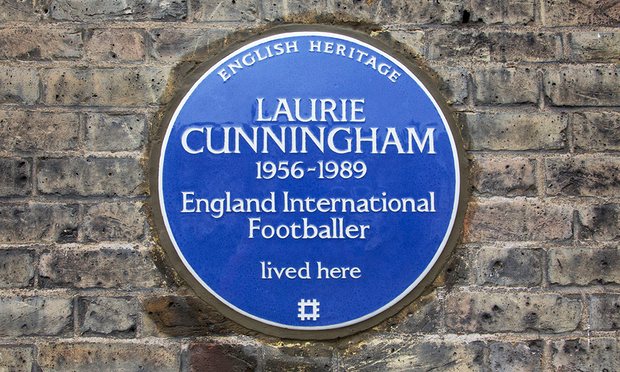


In November 2017, a statue by Graham Ibbeson was unveiled in Coronation Gardens, Leyton, near Brisbane Road, paying tribute to Cunningham and his time at Leyton Orient. Another statue by Ibbeson was unveiled in West Bromwich town centre in May 2019.
The work commemorates Cunningham's time at Albion alongside black teammates Brendon Batson and Cyrille Regis, with a spokesperson for the organisers commenting that "the three players opened the gates to allow black players into football at a time when they were locked out”.


A play based on his life, Getting the Third Degree by Dougie Blaxland, was first performed in 2019.