February 21st: Today’s Feature
- webbworks333
- Feb 21, 2025
- 6 min read
February
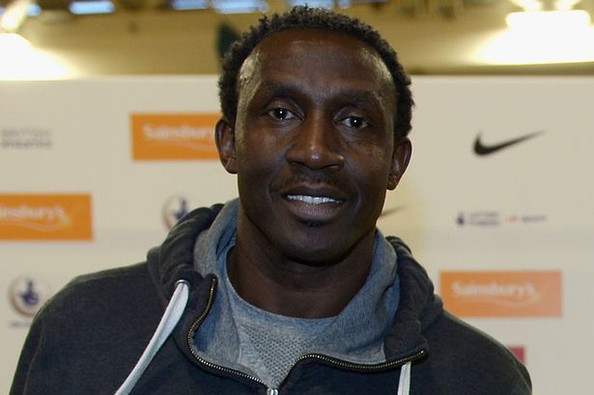
Linford Christie OBE, a former sprinter and athletics coach, was born on April 2, 1960, in Jamaica and later became a British citizen. He holds the distinction of being the only British man to have won gold medals in the 100 meters at all four major competitions available to British athletes: the Olympic Games, the World Championships, the European Championships, and the Commonwealth Games.
Christie was the first European athlete to break the 10-second barrier in the 100 meters and held the British record in the event for nearly three decades. He also achieved world indoor and European records in various sprint events.

Throughout his career, Christie amassed an impressive collection of 24 medals, making him one of the most decorated British athletes in history. His achievements were recognised when he was named the BBC Sports Personality of the Year in 1993. His life, however, has not been without controversy.
Christie tested positive for a banned stimulant during the 1988 Seoul Olympics and was later suspended for two years by the IAAF in 1999 after testing positive for the banned substance nandrolone. Despite these setbacks, Christie went on to have success as a coach, guiding athletes such as Darren Campbell and Katharine Merry to Olympic and World medals.
Early Life & Education
Christie's birthplace is Saint Andrew, Jamaica, where he was raised by his maternal grandmother. At the age of seven, he moved to Acton, London, England, to join his parents who had migrated there five years earlier. He received his education at Henry Compton Secondary School in Fulham, London, where he excelled in physical education. In 1977, he represented the borough of Hammersmith & Fulham in the inaugural London Youth Games. Additionally, in 1978, he became a member of the Air Training Corps, specifically 336 (Hammersmith) Squadron. However, it wasn't until he turned 18 that he began taking athletics seriously.
Professional Athletics Career
Initially, Christie's performance in his early track career showed little promise. Despite his efforts, he was unable to secure a spot on the Great Britain team for the 1984 Summer Olympics, even missing out on the sprint relay squad. However, his dedication to improving his running technique under the guidance of coach Ron Roddan in 1979 eventually led to the realisation of his true potential.



In 1992, Christie made history by becoming the third British athlete to win the Olympic 100m event, following in the footsteps of Harold Abrahams and Allan Wells. He secured the title at the Barcelona Olympic Games, triumphing over Frankie Fredericks of Namibia. Notably, at 32 years old, Christie became the oldest Olympic 100m champion, surpassing the previous record by four years and 38 days.
The year 1993 marked a remarkable achievement for Christie as he became the first man ever to hold the Olympic, World, European, and Commonwealth titles in the 100m event. His victory at the Stuttgart World Championships, where he clocked his fastest time of 9.87, solidified his dominance. This time remained the British record until 2023, further highlighting his exceptional performance. As a result of his outstanding accomplishments, Christie was honoured by the British public, who voted him as the BBC Sports Personality of the Year.

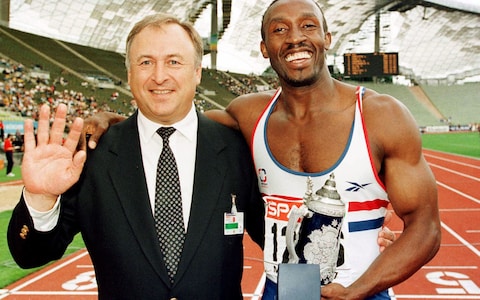


Christie's consistent performances and ability to maintain his competitive edge were evident throughout his career, even in the face of challenges. Despite being disqualified in the final of the 1996 Olympics due to false starts, Christie's legacy as a remarkable athlete remained intact. He retired from representative international competition in 1997 but continued to make appearances at invitation meetings.
Retirement, Achievement & Legacy
Following his positive drugs test and ban from athletics, Christie transitioned into a career as a presenter on BBC programs such as Record Breakers and Garden Invaders. He also had a contract with BBC Sport. However, he has since shifted his focus to managing his own company, reducing his public presence.




In 1990, Christie made his acting debut on the BBC show Grange Hill, followed by an appearance on another BBC program called Hustle. He later participated in the reality show I'm a Celebrity... Get Me Out of Here! on the UK ITV television channel in 2010, where he was eliminated on November 30th.
Reflecting on his track career, Christie expressed that he would be content if people remembered him as one of the world's top athletes. He held the British record in the 100 meters for nearly three decades, with a time of 9.87 seconds achieved at the 1993 World Championships. Christie was the third British athlete and fifth European to win the Olympic gold in the 100 meters, a feat that remained unmatched until 2021. At the age of 32, he remains the oldest male athlete to achieve this milestone at the Olympics.

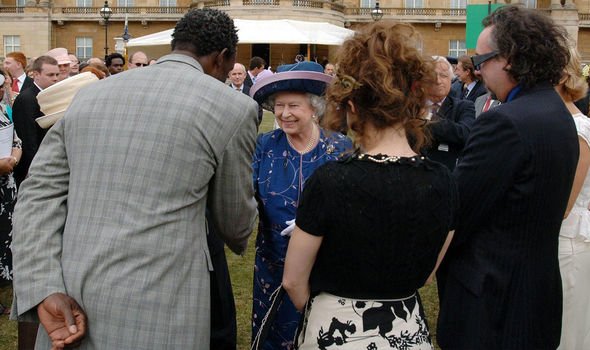


Christie achieved a world indoor record in 1995, running 200m in 20.25 seconds at Liévin. This outstanding performance places him as the seventh fastest sprinter on the all-time list. In recognition of his achievements, Christie was awarded the MBE in 1990 and the OBE in 1998.
The West London Stadium, where he trained extensively, was renamed the Linford Christie Stadium in his honour.


Additionally, Christie's famous quote about starting races on the "B of the Bang" inspired a public sculpture with the same name, which was unveiled by him in 2004. However, due to safety concerns, the sculpture was dismantled in 2009. Christie's remarkable career led to his induction into the England Athletics Hall of Fame in 2010 and the London Youth Games Hall of Fame in 2009.
*********************************
Linford’s ‘Big Issue’ Reflection (2021)
“I grew up in Jamaica with my two older sisters. I remember a lot about my early life there. I grew up in a loving home, with my grandmother looking after us. We were taught about respect. I loved my grandmother very much. She was firm, she was my first teacher. I left when I was seven but… you can take the man from the country but you can’t take the country from the man. I’ll always be Jamaican in my roots, as much as I feel very British now.


Jamaicans are among the most creative people in the world, they just need more opportunities to show it. Of course I loved watching Usain Bolt run as a great Jamaican runner but I’m not going to lie, I also wished I could have competed against him running for Britain.
“My father came to Britain first, then my mum, then we followed, me and my sisters. I had always been told by my grandmother that we’d be going to join my parents in Britain one day. We didn’t really know them. My father came to Britain to work, my mother was a nurse. They came here by invitation – the government was asking people from the Commonwealth to come and help make Britain great again. And those people, including my parents, came to make a better life.



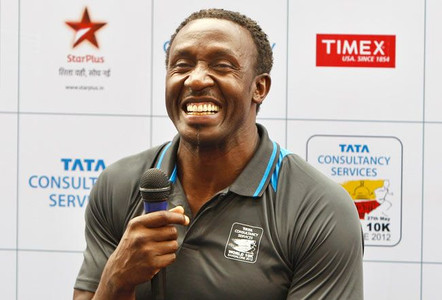
“We had always been told the streets of England were paved with gold. ‘The houses are made of bricks and they have paper on the walls.’ We arrived at Gatwick Airport and it wasn’t quite what we expected. We didn’t see any trees! We moved to Loftus Road, home of QPR, at the edge of White City [in West London]. We had two rooms for the seven of us. But there were lots of things to do.
We played a lot on the streets and in the little local park. It was summer when we arrived and playing outside was great. Until it snowed for the first time. We were excited when we saw it and we ran outside shouting ‘Snow snow snow!’ Then we picked it up and it was ‘Woah.’ Our fingers started to burn. That was a big shock.


“I got racism from the first day I went to school. I was one of a very few black pupils. Kids are cruel. I didn’t realise I was black until someone told me. I told my parents, who said I would have to learn to ignore people and I’d just have to cope with it. Which I thought was great. They didn’t tell me to retaliate or hit anyone or behave in a bad way. But I was quite tough and I coped quite well. I had a few fights. I learned to run home very fast at the end of the school day. I think I owe those people something for my future success!”