March 28th: Today’s Feature
- webbworks333
- Mar 28
- 4 min read
March
Dr Paul Stephenson - Part II
Dr Paul Stephenson gained national recognition when he was denied service at the Bay Horse pub in Bristol and refused to leave without being served. The bar manager's discriminatory remark, "We don't want you black people in here – you are a nuisance," led to Stephenson's arrest and charge for failing to leave a licensed premises. The incident received significant media coverage, with the Bristol Evening Post even publishing a headline that mocked Stephenson as a "West Indian leader made a fool of himself." However, during his trial, witness testimonies contradicted the prosecution's claim that Stephenson had behaved aggressively, resulting in the case being dismissed. Furthermore, the barman responsible for the incident was subsequently dismissed by his employers.


Stephenson then relocated to Coventry to work as a Senior Community Relations Officer before moving to London in 1972 to join the Commission for Racial Equality. During his time in London, he collaborated with Muhammad Ali to establish the Muhammad Ali Sports Development Association in Brixton and organised the Cleo Laine Schools' Music Awards from 1977 to 1982 alongside Cleo Laine and John Dankworth.
In 1975, he was appointed to the Sports Council and actively campaigned against sporting ties with apartheid South Africa. Stephenson's contributions to the community were recognised when he became the honorary president of Bristol's West Indian Parents' Association in 1979 and was appointed to the Press Council in 1981.


Upon his return to Bristol in 1992, he played a pivotal role in establishing the Bristol Black Archives Partnership (BBAP), which aims to safeguard and promote the history of African-Caribbean individuals in Bristol. This initiative began when Stephenson entrusted his personal archives to the Bristol Record Office for preservation.
Awards and honours/legacy
The train named in his honour
Stephenson's contributions and achievements have been recognised and honoured through various awards and accolades. In 1988, he was presented with the Bristol City Council Community Award for his outstanding achievements and services rendered to both the Black Community and the West Indian Community Publishers Award. These awards acknowledged his significant contributions and dedication to improving the lives of individuals within these communities.


Additionally, Stephenson received the Bristol West African and Caribbean Council Community Achievers' Award in 1996, further highlighting his commitment to fostering unity and progress within the African and Caribbean communities in Bristol. This recognition showcased his tireless efforts in promoting inclusivity and empowering individuals from diverse backgrounds.
In 2006, Stephenson was honoured with the city council's One Person Can Make a Difference Award, underscoring his exceptional ability to effect positive change and inspire others through his actions. This award acknowledged his influential role in advocating for social justice and equality, as well as his dedication to encouraging community involvement.
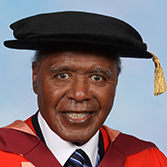


A significant milestone in Stephenson's journey came in 2007 when he was granted the Freedom of the City of Bristol, becoming the first black individual to receive this prestigious honour. The citation accompanying this recognition emphasised his lifelong commitment to improving race relations and fostering community engagement. It also highlighted his instrumental role as a founding member of the Bristol Black Archives Project, which has played a vital role in deepening the understanding of the city's history and fostering stronger relationships among all communities in Bristol.
In recognition of his outstanding contributions to equal opportunities and community relations in Bristol, Paul Stephenson was awarded an OBE in 2009. His remarkable work in race relations and his dedication to extending opportunities to socially excluded young people led to him receiving honorary degrees from the University of the West of England (Master of Education) in November 2009 and the University of Bristol (Doctor of Law) in July 2014. These degrees were a testament to his tireless efforts in fighting for equality and civil rights for over six decades, both in Bristol and around the world.

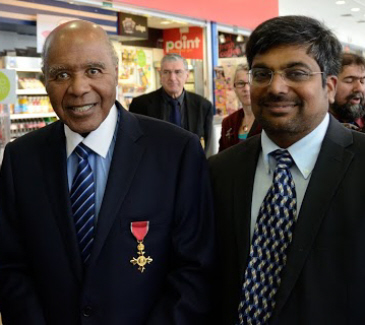


Stephenson's remarkable achievements did not go unnoticed, as he was honoured with a Pride of Britain Award for Lifetime Achievement in November 2017. Lenny Henry, who presented him with the award, acknowledged Stephenson as a giant whose contributions paved the way for black and Asian politicians. The judges' citation highlighted his courage, principles, and determination, emphasising that his efforts had made Britain a more open and tolerant society. Stephenson's story serves as a powerful reminder that the fight for civil rights was not limited to America.


The impact of Paul Stephenson's legacy continued to resonate in Bristol, as a campaign emerged in June 2020 to replace the toppled statue of Edward Colston with one honouring Stephenson. This campaign symbolised the recognition of his significant contributions to the city and his role in challenging racial inequality. In a ceremony held at Bristol Temple Meads on October 20, 2020, Great Western Railway further honoured Stephenson by naming one of its Intercity Express Trains (800 036) after him. This gesture served as a testament to his enduring influence and the profound impact he had on Bristol's history and society.
Archives and personal papers
Bristol Archives houses a variety of historical materials such as photographs, newspaper clippings, letters, and other miscellaneous items that pertain to Paul Stephenson and the 40th anniversary commemorations of the Bristol Bus Boycott campaign, with a reference number of 42840 available in the online catalogue for easy access and research purposes.


In addition to the specific collection mentioned, the Bristol Black Archives Partnership collections are also stored at Bristol Archives, as highlighted in the publication "A Guide to African-Caribbean Sources at Bristol Record Office," which acknowledges multiple collections related to this important aspect of history and culture.
For those interested in delving deeper into the subject matter, a recommended read is "Memoirs of a Black Englishman" by Paul Stephenson OBE with Lilleith Morrison, published by Tangent Books in 2011. This book, featuring a foreword by Tony Benn, provides valuable insights and information on the topic, with an ISBN of 978-1906477394 for reference.