April 5th: Today’s Feature - Part I: Basil D’Oliveira, Cricketer
- Apr 5
- 4 min read
April
Part I: Basil D’Oliveira
Basil Lewis D'Oliveira, CBE, OIS, (4th October 1931-19th November 2010, was a prominent England cricketer with a South African Cape 'Coloured' heritage. His potential inclusion in the England team for the 1968-69 tour of apartheid-era South Africa sparked what became known as the D'Oliveira affair.
Known affectionately as "Dolly", D'Oliveira had a successful career playing county cricket for Worcestershire from 1964 to 1980. He also represented England in 44 Test matches and four One Day Internationals spanning from 1966 to 1972, leaving a lasting impact on the sport.

Early Life
D'Oliveira hailed from a devout Catholic household residing in Signal Hill, Cape Town. Unlike the majority of his community, who traced their roots back to Malaya or Indonesia, he suspected that his family originated from Madeira, which accounted for his Portuguese surname. During his childhood, he would frequent the Newlands Cricket Ground in Cape Town, where he would eagerly scale the trees surrounding the venue to catch a glimpse of the thrilling matches taking place.
In addition to his passion for cricket, D'Oliveira assumed the role of captain for South Africa's national cricket team for non-white players. Furthermore, he showcased his athletic prowess by representing the non-white national side in football matches.


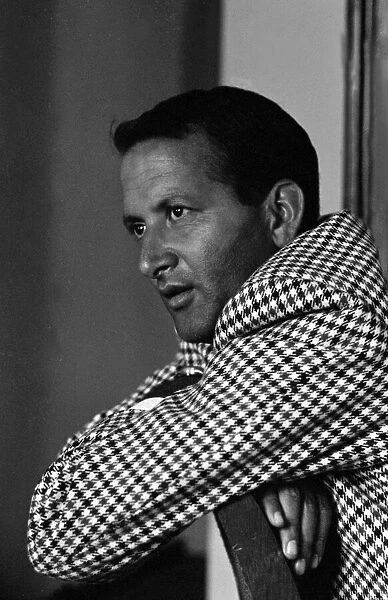
With the assistance of John Arlott, along with the unwavering support from the members and supporters of St Augustine's Cricket Club in Cape Town, he made the life-changing decision to relocate to England in 1960. It was through the efforts of journalist John Kay that he secured a spot in the Central Lancashire League team of Middleton. As he settled into his new surroundings, D'Oliveira couldn't help but express his surprise at witnessing white individuals performing menial tasks and even waiting on him in restaurants. Four years later, in 1964, he joined the prestigious Worcestershire County Cricket Club as a first-class county player and eventually became a British citizen.
The year 1966 marked a significant milestone in D'Oliveira's cricket career as he was chosen to represent the England cricket team as an all-rounder in the second Test against the West Indies. Making a solid debut, he showcased his batting skills by scoring 27 runs before being run out.


D'Oliveira's exceptional performance continued in subsequent matches. In the Test against India, he showcased his batting prowess by scoring an impressive 109 runs in the first innings, contributing significantly to England's six-wicket victory. This success carried over to the entire series, as England emerged triumphant with a 3-0 win. When facing Pakistan, D'Oliveira once again displayed his consistency and skill by scoring fifties in both innings of the first Test. This remarkable achievement played a crucial role in England's 2-0 series victory against Pakistan.
Playing Style & Personality
D'Oliveira, known for his successful batting style characterised by a low backlift and powerful strokes, was also recognised for his fierce competitiveness on the field. During the Australian tour in 1970–71, after securing a series victory, he made a bold statement by pointing his forefinger into the chest of every Australian player he encountered, declaring "We stuffed you."


In his pursuit of playing international cricket, D'Oliveira was cautious about revealing his true date of birth. Following his passing, journalist Pat Murphy, who collaborated with him on his autobiography, revealed that Basil had intentionally misled about his age to avoid being overlooked for selection in the England team. Initially claiming to be born in 1935, he later adjusted his birth year to 1933 to secure his spot in the squad. It wasn't until 1980, during the writing of his book, that he admitted his actual birth year was 1928, indicating that he was 38 when he made his debut for England in 1966 and 83 at the time of his death.
The D’Oliveira Affair
The D'Oliveira Affair, which unfolded in 1968, was a pivotal moment that significantly shifted global perception of the apartheid system in South Africa. The decision by South African cricket officials to oppose Basil D'Oliveira's inclusion in the England squad ultimately led to the cancellation of the tour, resulting in South Africa being excluded from Test cricket for over two decades. This controversy put immense pressure on the Marylebone Cricket Club (MCC) hierarchy, who initially decided not to select D'Oliveira, sparking dissent among opponents of apartheid.

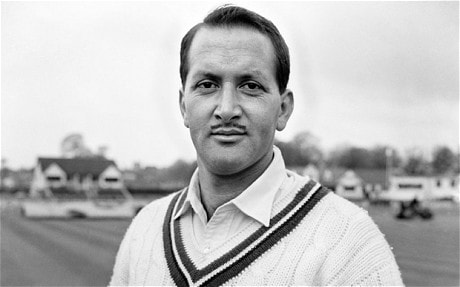


The exclusion of D'Oliveira was viewed as a strategic move to maintain cricket ties with South Africa, despite growing international condemnation of the apartheid regime. However, when Warwickshire's Tom Cartwright was unable to participate due to injury, D'Oliveira was eventually called up to the squad, further intensifying the political tensions surrounding the tour. South African Prime Minister B. J. Vorster's adamant stance against D'Oliveira's inclusion ultimately led to the tour's cancellation, marking a significant moment in the history of sporting boycotts against apartheid South Africa.


The aftermath of the D'Oliveira Affair reverberated far beyond the realm of cricket, sparking broader discussions about racial equality and human rights. The events of 1968 not only influenced international perceptions of apartheid but also catalysed changes within South African society. The dramatisation of these events in a BBC Radio 4 play in 2009 underscored the lasting impact of the D'Oliveira Affair on the history of sports and social justice.
Continued in Part II