May 23rd: Today’s Feature
- webbworks333
- May 22, 2025
- 3 min read
Updated: May 23, 2025
May
William Manuel Morris, Baron Morris of Handsworth, OJ, DL, born on 19 October 1938, is a distinguished former British trade union leader who made history as the first black leader of a major British trade union. Serving as the General Secretary of the Transport and General Workers' Union from 1992 to 2003, Morris played a pivotal role in advocating for the rights and welfare of workers across the nation.
In recognition of his contributions and leadership in the labor movement, Morris was appointed to the House of Lords, where he served under the Labour Party whip from 2006 to 2020. His tenure in the House of Lords provided him with a platform to continue championing the interests of workers and marginalised communities, further solidifying his legacy as a trailblazer in British trade union history.

Early Life
Born in Manchester Parish, Jamaica, Bill Morris's life took a turn after the passing of his father, William, who worked as a part-time policeman. In search of employment opportunities, his mother, Una, made the decision to immigrate to England and settled in Handsworth, Birmingham. Following in his mother's footsteps, Morris joined her in the UK in 1954 and secured a job at a nearby car parts manufacturer called Hardy Spicer Engineering Ltd.
In 1957, Morris tied the knot with Minetta, and together they were blessed with two sons. However, tragedy struck in 1990 when his beloved wife passed away, leaving Morris to navigate the challenges of life without her by his side.
Trade Union Career
Morris began his career in the Transport and General Workers' Union in 1958 and quickly rose through the ranks. He served as a shop steward and later joined the union as a full-time official after his tenure on the TGWU General Executive Council. Morris held various positions within the union, including district officer and district secretary, before becoming the national secretary of the Passenger Services Trade Group. In 1985, he was elected deputy general secretary and eventually became the general secretary in 1992, succeeding Ron Todd. Morris was re-elected in 1995 and remained in the position until his retirement in 2003, when Tony Woodley took over as general secretary.

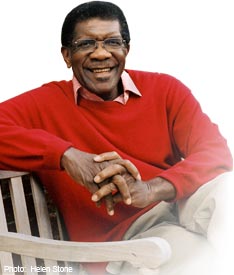


Morris has an extensive background in various prestigious roles, serving as a member of the TUC General Council and executive committee from 1988 to 2003. In 1998, he was appointed as a non-executive director of the Bank of England, showcasing his financial acumen and expertise in the field.
Furthermore, Morris's involvement in public service extended to his membership in the Royal Commission on the Reform of the House of Lords from 1999 to 2000, highlighting his commitment to governance and policy reform. His dedication to education is evident through his roles as a member of the Board of Governors of London South Bank University, a Trustee of the Open University Foundation, and a member of the Courts of the University of Northampton and the University of Bedfordshire.


Morris's contributions to academia were further solidified by his appointments as the first Chancellor of the University of Technology, Jamaica in 1999 and as Chancellor of Staffordshire University in 2004, underscoring his commitment to fostering educational excellence. His involvement in various advisory councils, such as the BBC and IBA, as well as his role as a Commissioner of the Commission for Racial Equality, demonstrate his dedication to promoting diversity and inclusivity in society.
House of Lords
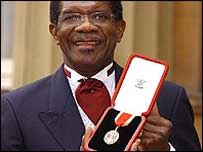
In 2002, Morris was honoured with the Order of Jamaica, followed by a knighthood in the 2003 Queen's Birthday Honours. Subsequently, on 11 April 2006, it was declared that Morris would become a member of the House of Lords as a working life peer. He was officially titled Baron Morris of Handsworth, of Handsworth in the County of West Midlands in June 2006. During his time in the House of Lords, he actively participated in the Parliamentary Joint Committee on Human Rights.
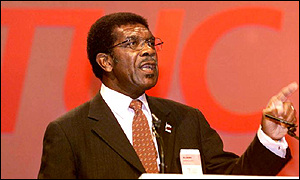
Fast forward to August 2014, Morris joined 200 other prominent public figures in signing a letter to The Guardian expressing their opposition to Scottish independence in the lead-up to the referendum scheduled for September of that year. This demonstrated his continued engagement in important political matters and his willingness to voice his opinions on significant issues.
Finally, after a long and distinguished career in the House of Lords, Morris decided to retire on 21 July 2020. His retirement marked the end of an era in his parliamentary service, during which he had made valuable contributions to various discussions and debates. Morris's legacy as a respected member of the House of Lords will be remembered for years to come.