June 1st: Today's Feature
- webbworks333
- May 31, 2025
- 5 min read
June
Stuart Henry McPhail Hall FBA (3 February 1932 – 10 February 2014), a Jamaican-born British Marxist sociologist, cultural theorist, and political activist, was a key figure in the development of British Cultural Studies. Alongside Richard Hoggart and Raymond Williams, he played a crucial role in establishing the Birmingham School of Cultural Studies. In the 1950s, Hall co-founded the influential journal New Left Review and later joined the Centre for Contemporary Cultural Studies at Birmingham University. As the director of the CCCS, he expanded the field of cultural studies to include race and gender, incorporating ideas from French theorists like Michel Foucault. Hall's contributions to academia and his involvement in the Black Arts Movement have solidified his status as one of the most influential intellectuals of the past six decades.

Throughout his career, Hall made significant contributions to the field of sociology. After leaving the CCCS, he became a professor of sociology at the Open University and served as the President of the British Sociological Association. His work and ideas have had a profound impact on cultural theory and have been recognised by scholars and intellectuals worldwide. Hall's legacy continues through the Stuart Hall Foundation, which was established in his honour to promote racial justice and equality.
Stuart Hall's intellectual prowess and dedication to social change have left an indelible mark on the academic and cultural landscape. His pioneering work in British Cultural Studies, his role in expanding the scope of cultural studies to include race and gender, and his involvement in the Black Arts Movement have solidified his position as one of the most influential thinkers of our time. Hall's legacy lives on through the Stuart Hall Foundation, which strives to build a racially just and more equal future. His ideas and contributions will continue to inspire generations to come.


Stuart Hall's background is deeply rooted in the complex history of Jamaica, with his ancestors having ties to both the English and Dutch settlers as well as involvement in the slave trade. This diverse heritage shaped his identity and perspective on issues related to race, colonialism, and social inequality. Hall's mixed-race heritage, which included African, English, Portuguese Jewish, and likely Indian ancestry, provided him with a unique lens through which to analyze and critique the power dynamics at play in society.
Hall's early education at Jamaica College, which followed a British model, laid the foundation for his intellectual development. Despite facing challenges due to his darker skin tone in a society that valued lighter skin, Hall excelled academically and was described as a "bright, promising scholar". His exposure to a wide range of literary and philosophical works, including the writings of
T. S. Eliot, James Joyce, Freud, and Marx, broadened his intellectual horizons and influenced his later academic pursuits.


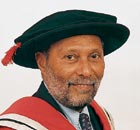


The experiences of growing up in a society marked by pigmentocracy, where skin colour determined social status and opportunities, deeply impacted Hall's worldview and scholarly work. His critical analysis of race, identity, and power dynamics in society was informed by his own experiences of navigating the complexities of race and class in Jamaica. Hall's personal background and educational journey played a significant role in shaping his intellectual pursuits and his commitment to challenging dominant narratives and structures of power.
In 1951, Hall was awarded a prestigious Rhodes Scholarship to Merton College at the University of Oxford. At Oxford, he pursued his studies in English and successfully obtained a Master of Arts degree. This marked his entry into the Windrush generation, a significant period characterised by the mass migration of West Indians to the United Kingdom. Initially, Hall had planned to delve into graduate research focusing on the medieval poem Piers Plowman, analysing it through the contemporary lens of literary criticism. However, his plans took a different turn when his language professor, the renowned J. R. R. Tolkien, advised him against this approach, emphasising that it was not the primary objective of the academic exercise.

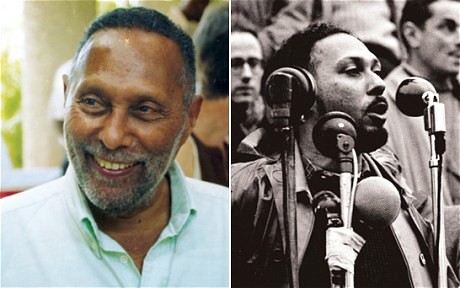


Subsequently, Hall shifted his academic focus and embarked on a PhD program centred on the works of Henry James at Oxford. However, his academic pursuits were profoundly influenced by the socio-political climate of the time. The events of the 1956 Soviet invasion of Hungary and the Suez Crisis had a profound impact on Hall, prompting him to reevaluate his priorities. These events, coupled with the changing political landscape that saw a significant exodus from the Communist Party of Great Britain, led Hall to redirect his energies towards political activism. In 1957, he became actively involved in the Campaign for Nuclear Disarmament (CND), a pivotal moment that not only shaped his political beliefs but also introduced him to his future wife during a CND march.




Following his teaching stint at a London secondary modern school and involvement in adult education from 1958 to 1960, Hall tied the knot with Catherine Hall in 1964. It was around this period that Hall came to the realisation that his future was unlikely to lead him back permanently to the Caribbean. This marked a significant turning point in his life, as he embraced his role as a prominent cultural theorist and political activist in the United Kingdom. Hall's journey from academia to activism underscored his commitment to social change and intellectual discourse, solidifying his legacy as a pioneering figure in British cultural studies.

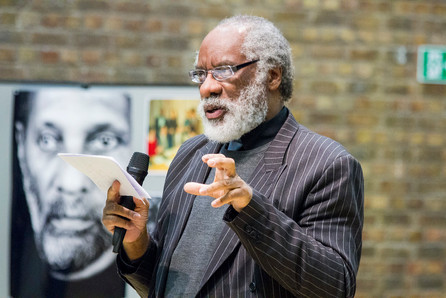


Prior to Margaret Thatcher's tenure as Prime Minister in 1979, Hall and Maggie Steed collaborated on the eye-opening program "It Ain't Half Racist Mum", produced by the Campaign Against Racism in the Media (CARM). This initiative aimed to challenge racial stereotypes and address prevailing British attitudes towards immigration. Following his appointment as a sociology professor at the Open University in the same year, Hall continued to publish influential works like "The Hard Road to Renewal" (1988) and "Formations of Modernity" (1992), solidifying his reputation as a leading figure in the field of Cultural Studies.
Additionally, Hall's legacy extended beyond academia as he played a pivotal role in establishing Iniva (Institute of International Visual Arts) and Autograph ABP (the Association of Black Photographers), showcasing his commitment to promoting diversity and inclusivity in the arts.



Hall's legacy is one that continues to resonate long after his passing. His contributions to academia and cultural studies have left an indelible mark on the field. His accolades, such as being elected a fellow of the British Academy and receiving prestigious awards like the Princess Margriet Award, speak volumes about the impact he had on society. His work in promoting multiculturalism and challenging conventional norms has earned him the title of the "godfather of multiculturalism", a fitting tribute to his groundbreaking ideas.
Even after his retirement from the Open University, Hall remained active in his pursuits, co-authoring a memoir that sheds light on his life and experiences. The posthumous publication of Familiar Stranger: A Life Between Two Islands gives readers a glimpse into the mind of a visionary thinker who straddled different worlds. The hours of interviews conducted with Hall over the years provide valuable insights into his thought process and the evolution of his ideas.
Hall's final resting place at Highgate Cemetery serves as a poignant reminder of his enduring influence. The audio artwork by Trevor Mathison, dedicated to exploring Hall's legacy, is a testament to the ongoing relevance of his work. Titled The Conversation Continues: We Are Still Listening, this soundscape offers a unique perspective on the lives and histories of those buried at Highgate Cemetery, placing them in the context of contemporary anti-racism movements. Hall's impact continues to reverberate through time, inspiring new generations to engage with his ideas and strive for a more inclusive society.