June 5th: Today's Feature
- Jun 5, 2025
- 3 min read
June
Born Lilian Bailey on February 18, 1918, Lilian Bader made history as one of the pioneering Black women to enlist in the British armed forces. Her legacy is marked by her courage, determination, and trailblazing spirit, breaking barriers and paving the way for future generations of women of colour in the military. On March 14, 2015, the world lost a true hero and inspiration, but her impact and contributions will forever be remembered and celebrated.

Early Life
Lilian Bader, a remarkable individual, came into this world on 19 Upper Stanhope Street in the vibrant Toxteth Park neighbourhood of Liverpool. Her father, Marcus Bailey, a courageous merchant seaman hailing from Barbados, valiantly served in the First World War. On the other hand, her mother, of Irish descent, was born in Britain. Tragedy struck in 1927 when Lilian and her two brothers were left orphaned following their father's passing. At the tender age of 9, Lilian was separated from her beloved siblings and placed in a convent, where she resided until she reached the age of 20. Lilian faced numerous challenges in her quest for employment due to her father's heritage. She candidly shared, "My casting out from the convent walls was delayed. I was half West Indian, and nobody, not even the priests, dare risk ridicule by employing me."'
Lilian's journey is a testament to her resilience and determination in the face of adversity.



World War II
In 1939, during the outbreak of the Second World War, Bader decided to join the Navy, Army and Air Force Institutes (NAAFI) at Catterick Camp in Yorkshire. Unfortunately, her time there was short-lived as she was dismissed after just seven weeks due to the revelation that her father was not a native of the United Kingdom. This unexpected turn of events led her to seek other opportunities to contribute to the war effort.
Subsequently, on 28 March 1941, she made the decision to enlist in the Women's Auxiliary Air Force (WAAF) upon learning that the Royal Air Force (RAF) was accepting individuals of West Indian descent. She underwent training in instrument repair, a field that had recently become accessible to women. Through her dedication and hard work, she advanced from a Leading Aircraft Woman to the rank of corporal, showcasing her commitment to serving her country during a time of great need.


By 1943, she had tied the knot with Ramsay Bader, a tank driver in the 147th (Essex Yeomanry) Field Regiment, Royal Artillery. However, her military career came to a halt in February 1944 when she was granted a compassionate discharge due to her pregnancy with their first child. Over time, the couple welcomed two sons, Geoffrey and Adrian, marking a new chapter in their lives as they navigated the challenges and joys of parenthood while still holding onto the memories of their wartime experiences.
Post War Life
Bader and her spouse relocated to Northamptonshire after the war to start a family. In the 1960s, she pursued O-Levels and A-levels through evening classes and later obtained a Bachelor of Arts degree from London University. Subsequently, she embarked on a teaching profession.

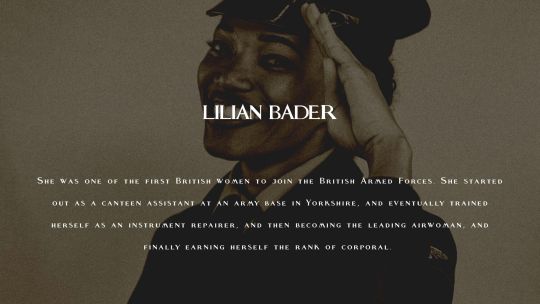


After the war, Bader and her husband decided to settle in Northamptonshire and raise their family. During the 1960s, she attended evening classes to complete her O-Levels and A-levels. Later, she pursued higher education at London University, earning a Bachelor of Arts degree. Following her studies, she pursued a successful career as a teacher.
Legacy
The Voice newspaper recognised Bader, along with seven other influential Black women, for their significant contributions to the progress of Britain in 2018. This acknowledgment was part of the newspaper's celebration of the 100th anniversary of women's suffrage, highlighting the achievements of women who have played a crucial role in shaping the nation's development. Bader's inclusion in this esteemed list demonstrates her impact and influence in various areas.



Fast forward to October 2020, and Bader's legacy was further solidified with the publication of an entry dedicated to her in the prestigious Oxford Dictionary of National Biography. This recognition signifies the lasting impact she has had on British society and her enduring place in history. The inclusion of her biography in such a renowned publication ensures that her contributions will be remembered and celebrated for generations to come.



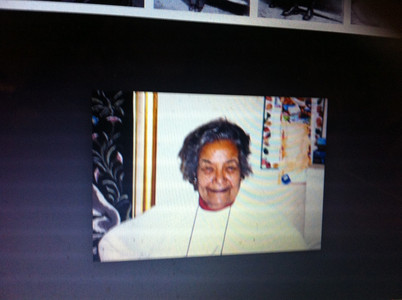
Bader's recognition alongside other remarkable Black women in The Voice newspaper and her subsequent inclusion in the Oxford Dictionary of National Biography highlights the importance of acknowledging the diverse contributions of women in shaping Britain's history. By honouring Bader and her achievements, these publications not only pay tribute to her individual accomplishments but also shed light on the often overlooked contributions of Black women throughout British history. This serves as a reminder of the need for inclusivity and recognition of all individuals who have played a significant role in the development and progress of a nation.