June 12th: Today's Feature
- Jun 11, 2025
- 8 min read
June
John Fashanu (born 18 September 1962) was an English television presenter and former professional footballer before moving to Nigeria where he is still in residence. Fashanu was born in Kensington, London, the son of Pearl Gopal, a nurse from British Guiana and Patrick Fashanu, a Nigerian barrister living in the UK. John and his older brother Justin, were separated from their mother and siblings at a young age and placed in foster care by Barnardo's. Justin, being more sensitive, struggled with feelings of abandonment, while John viewed their circumstances in a different light.

Early Years
John's deep-seated insecurities stemming from their tumultuous childhood manifested in shyness and a speech impediment, making him rely heavily on his bond with Justin for support and understanding. He recalls Justin as the only person who truly listened to him, highlighting the strong connection they shared from a young age. This bond was crucial for John's emotional well-being and sense of security, especially during their formative years in foster care.
The brothers eventually found a sense of stability when they were fostered by a white couple in Shropham, Norfolk, where their birth mother would visit them monthly. Despite the initial challenges they faced in adjusting to their new family dynamic, John found solace in the affection and security provided by his foster mother, who embraced him with warm hugs that offered comfort and reassurance. These moments of tenderness and care played a significant role in shaping John's perception of family and belonging, highlighting the importance of love and support in overcoming past traumas.


The boys' skin colour set them apart from the rest of the community in Norfolk. John vividly remembers how rare it was to see individuals with black skin during his childhood. The only black figures he encountered were famous personalities like Michael Jackson and Muhammad Ali. This lack of diversity led John to believe that he was white himself, simply because everyone around him was white. The concept of race was foreign to him, and he grew up in an environment where his skin colour was not a topic of discussion.
Everything changed for John when he traveled to Nigeria at the age of 18, without his brother Justin. Stepping off the plane, he was overwhelmed by the sight of people who looked like him everywhere. It was a moment of realisation and connection for John, as he finally felt a sense of belonging and acceptance. The experience of being surrounded by individuals who shared his skin colour was a turning point in his life, marking the beginning of a new chapter where he embraced his identity as a black man.


On the other hand, Justin had a more complex relationship with his heritage. Despite feeling proud of his heritage, he carried emotional scars from his past that made him both vulnerable and charismatic. His traumatic childhood experiences haunted him, leading to violent nightmares that persisted into adulthood. Justin's journey towards self-acceptance and understanding his identity was a challenging one, especially in a society that was still grappling with issues of racism and discrimination. John reflects on the struggles they faced growing up in a racist environment, acknowledging the progress that has been made while recognising the sacrifices they had to endure along the way.
After enduring countless beatings, the brothers decided to pursue boxing and martial arts as a means of self-defence and empowerment. The determined and focused John dedicated himself to mastering these disciplines, becoming an expert in both. However, Justin, being more susceptible to the opinions of others, was discouraged by those who viewed these activities as dangerous. John reflects on this, stating that Justin was always starting something new and quickly losing interest in it.


Football & Career
Despite his reservations about combat sports, Justin's exceptional talent in football could not be ignored. In fact, it became their primary source of income, as opportunities for black individuals in other professions, such as banking or law, were scarce at the time. John explains that they recognised singing, dancing, or playing football as the only viable paths to financial success for black individuals.
Justin soon found his place in the football world, initially making a name for himself at Norwich before catching the attention of Brian Clough, the renowned manager of Nottingham Forest, who signed him in 1981. However, it was during his time at Nottingham Forest that Justin's lifestyle took a turn towards extravagance and recklessness. He developed a taste for lavish spending and embraced the vibrant nightlife of Nottingham, frequently visiting gay bars. Unfortunately, his behaviour became increasingly erratic, leading to his eventual falling out with Clough, who even went as far as involving the police in one incident at the training ground. As injuries began to plague Justin's career, his personal life spiralled into chaos.





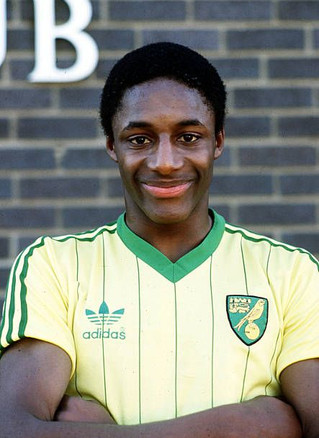
In 1983, John made the decision to leave Norwich, feeling overshadowed by his more talented brother. He also harboured resentment towards Justin for not using his influence to support him within the club or elsewhere. The man who had once been John's guiding light, his everything, eventually became his greatest adversary. Their relationship never fully recovered from this fracture, leaving John with a deep sense of betrayal and anger towards his brother.
In 1986, John embarked on a new chapter in his football career by joining Wimbledon. His arrival proved to be a pivotal moment for the team, as he played a crucial role in establishing the Crazy Gang's dominance in the top division. Their efforts culminated in a momentous victory when they clinched the FA Cup in 1988, solidifying their status as a force to be reckoned with in English football.


Rumours & Confrontations
The following year, John's talent and dedication were recognised when he was selected to represent England. This was a significant achievement for him, as it showcased his exceptional skills on an international stage. However, amidst the triumphs and accolades, John found himself caught in a distressing incident during the 1990 Professional Footballers' Association dinner.
During the event, John was confronted in the restroom by a renowned player from Nottingham Forest. Shockingly, the player made a derogatory comment about John's brother, insinuating that he was gay. Although John had heard whispers about his brother's sexuality, this direct insult ignited a surge of anger within him. His immediate instinct was to retaliate physically, but it was Vinnie Jones who intervened and prevented him from acting on his impulse. John's protective instincts were triggered, as he felt that his brother had been disrespected, and he was determined to defend his family's honour.


He sought answers from Justin, but John, a proud African man, found it hard to believe what Justin was confiding in him. Both of their mothers were unwell, but John's initial reaction was one of skepticism. He thought Justin was only seeking attention and money, which led to an outburst of anger from John. He firmly told Justin that they did not need any drama at that moment, offering him a large sum of money to keep quiet.
Apart from being concerned about his mother's health, John was also worried about his own reputation. He feared that people would start associating him with the situation. John was part of a group of tough, macho men in the public eye, known for their strong image and aggressive playing style. The sudden revelation from his brother, Justin, threatened to tarnish the image they had built over the years.

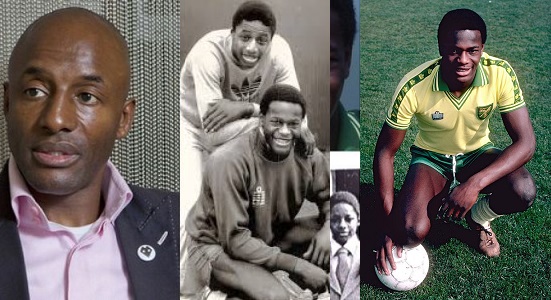


The news of Justin confiding in John about their mothers' health issues had put John in a difficult position. He was torn between his loyalty to his family and his public image. John's reaction was a mix of disbelief, anger, and concern for his own reputation. The situation forced him to confront his emotions and priorities, highlighting the complexities of family dynamics and public perception.
Scandal & Tragedy
In order to support his brother, John decided to provide financial assistance by writing a cheque and sending Justin to a hotel with his agent. However, things took an unexpected turn when John discovered that his agent was gay and a supporter of the gay community. Along with this revelation, Justin ended up keeping the money and selling his story to the Sun anyway, causing a rift in their relationship.

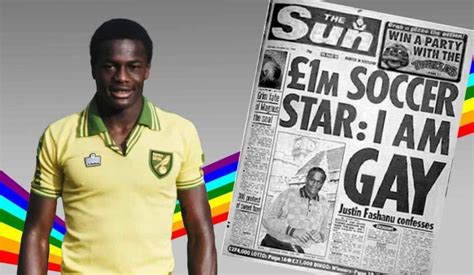


Justin's actions did not stop there, as the Sun went on to make scandalous claims about Justin having an affair with a married Conservative MP and engaging in inappropriate behaviour in the House of Commons. Although Justin later retracted these statements, John remained skeptical about the truth behind these allegations. Additionally, accusations of serious crimes in the US further tarnished Justin's reputation, leading to a warrant for his arrest on multiple charges.
The strained relationship between the brothers reached a breaking point when Justin's behaviour became increasingly erratic and John felt overwhelmed by the constant need to support him financially and emotionally. Despite his evolving views on homosexuality, John struggled to come to terms with Justin's actions then and ultimately questioned whether he should continue to offer unconditional support.

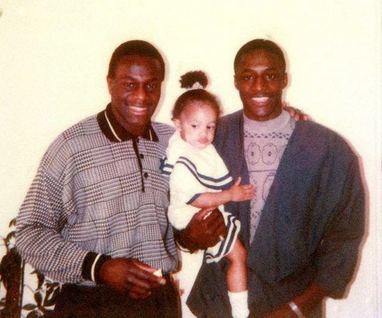


During their last conversation, Justin expressed his concerns about his freedom to his brother John, who has since come to terms with accepting homosexuality as a normal part of life. However, despite this progress, John was too overwhelmed and frustrated back then to fully comprehend Justin's message and did not feel that Justin deserved his unwavering support. John expressed his feelings in media outlets stating, "There comes a time when it's enough help. Enough is enough. He was my older brother, not my younger brother. Why am I continually giving him money?"
Just three days after this conversation, John found himself in the midst of a tragic situation. While baptizing his son Amir, the police arrived with the media in tow to deliver the devastating news that Justin had taken his own life. John was then asked to identify his brother's body, a moment that would forever change his life and perspective on their relationship.


John expresses immense regret and self-blame for not recognising the challenges that his brother, Justin, was facing. He acknowledges that a little more understanding and compassion could have made a significant difference in their relationship. John realises that the same misunderstanding he had with Justin was also present between Justin and their mother. This realisation highlighted the importance of empathy and open communication within their family dynamic.
Despite feeling remorseful, John firmly believes that dwelling on what could have been is futile. He understands that the choices he made in the past have shaped the world as it is today. John accepts that he cannot change the past or live each day haunted by guilt and has emphasised the need to keep focus on the present. He also dismisses the notion that handling Justin's coming out differently would have altered the outcome. John is resolute in his belief that even if he had approached Justin's coming out differently, the outcome would have remained unchanged. He is convinced that Justin may have even resorted to drastic measures sooner if he had not intervened in the way that he did.

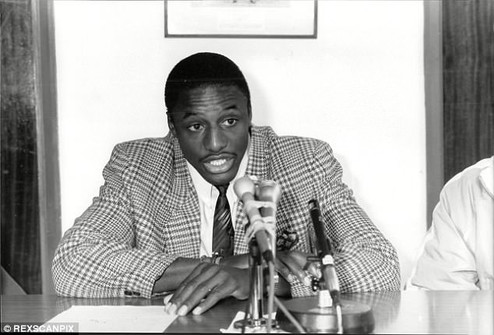




While John still remembers Justin in his prayers, he has managed to move forward with his life. He puts things into perspective by acknowledging the losses he has experienced, including the deaths of his mother, other mother, and father. John's ability to cope with these losses has allowed him to find strength and resilience. He remains proud of his brother, recognising that Justin's impact on the world, regardless of people's opinions, has solidified his status as a legend.
Family & Legacy
Amal Fashanu, John's daughter, is known for her work as an Equality campaigner. She established the Justin Fashanu Foundation in honour of her late uncle, Justin Fashanu.
It was at the young age of 10 when Ms. Fashanu experienced the tragic loss of her uncle in 1998 after taking his own life at the age of 37.


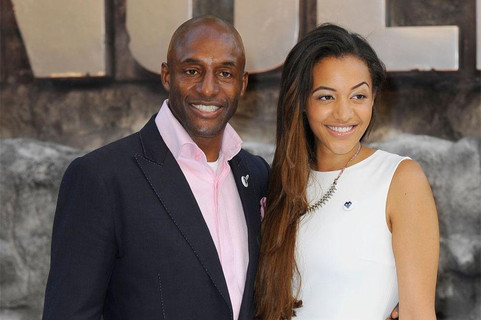
Fast forward to the year 2020, she graciously accepted the Hall of Fame award on behalf of her uncle, Justin Fashanu, further solidifying his legacy and impact on the world of sports and beyond.
John Fashanu's impact on the football field is most notably remembered during his time at Wimbledon, where he skilfully led "the Crazy Gang" to a triumphant FA Cup victory. As a player, Fashanu displayed remarkable bravery, aggression, and positivity, all while exuding a level of elegance and cunning that surpassed all expectations. It was as if he possessed the grace and finesse of a figure skater, encapsulated within the body of a boxer.


Unfortunately, Fashanu's football career was cut short due to injuries, forcing him into retirement. Despite a few allegations that have been made against him, these claims have not significantly tarnished his amiable off-field reputation. This reputation has been cultivated through his engaging role as a presenter on popular TV shows like The Gladiators, as well as his commendable charity work focused on Africa. Fashanu's contributions off the field have further solidified his likeable persona, making him a respected figure in both the entertainment industry and the realm of philanthropy.