June 23rd: Today’s Feature
- Jun 22, 2025
- 5 min read
June
Linton Kwesi Johnson OD, also known as LKJ, is a renowned dub poet and activist originally from Jamaica but now residing in Britain. In 2002, he achieved a significant milestone by becoming the second living poet, and the sole black poet, to have his work included in the prestigious Penguin Modern Classics series. Johnson's distinctive approach blends Jamaican patois with dub-reggae, frequently teaming up with reggae producer/artist Dennis Bovell to create captivating performances.

Early Life
Johnson was born in Chapelton, a quaint town nestled in the rural parish of Clarendon, Jamaica. His middle name, "Kwesi", holds a significant meaning as it is a Ghanaian name traditionally bestowed upon boys born on a Sunday, just like Johnson. In 1963, he embarked on a new chapter in Brixton, London, where he reunited with his mother, who had migrated to Britain as part of the Windrush generation shortly after Jamaican independence in 1962. Johnson's formative years were spent at Tulse Hill School in Lambeth, where his passion for activism and poetry began to blossom.
Johnson pursued his academic journey by studying sociology at Goldsmiths College in New Cross, London, and successfully graduated in 1973. Reflecting on his poetic beginnings in a 2018 interview, he emphasised how poetry became a powerful tool for expressing the collective anger and passion of his generation in the face of racial oppression. His involvement with the British Black Panther Movement and Rasta Love group of poets and drummers further fuelled his artistic endeavours. Johnson's early professional role as a library resources and education officer at the Keskidee Centre allowed him to witness the transformative impact of his poetry being brought to life on stage, setting the stage for his future as a renowned poet and activist.


In the 1970s, Johnson contributed to publications like New Musical Express, Melody Maker, and Black Music. He also worked as a freelancer for Virgin Records, crafting biographies for reggae artists, sleeve notes, and advertising copy.
Poetry
Johnson's poetry is deeply rooted in his experiences as an African-Caribbean in Britain, making it a powerful tool for shedding light on social and political issues. His words are not just a means of self-expression, but a form of resistance against injustice and inequality. By using poetry as a cultural weapon, Johnson challenges the status quo and demands change. His work serves as a voice for those who are marginalised and oppressed, bringing attention to the struggles faced by the African-Caribbean community in Britain.


In addition to addressing issues related to race and identity, Johnson's poetry also delves into broader topics such as British foreign policy and social conditions. Through his writing, he confronts the systemic injustices that exist within society and calls for accountability from those in power. By shining a light on the death of anti-racist marcher Blair Peach and the impact of Thatcher's government, Johnson's poetry serves as a historical record of the struggles faced by marginalised communities in Britain.
Johnson's use of Jamaican patois in his poetry adds another layer of complexity and richness to his work. By incorporating this unstandardised transcription, he not only pays homage to his cultural roots but also challenges traditional notions of language and communication. Johnson's poetry is a testament to the power of words in shaping narratives and challenging dominant ideologies. Through his writing, he invites readers to engage with different perspectives and to question the status quo.


Essays
Over the course of five decades (1976-2021), Johnson's essays have been compiled in the book Time Come (Picador, 2023). According to Colin Grant, the writing is characterised by its sharpness and passionate undertones, maintaining a tense and logical approach while teetering on the brink of fury. The elegance and impact of LKJ's writing remain as vital as ever. In a review for the Sunday Times, Tomiwa Owolade asserts that this collection highlights Johnson's commitment as a cultural critic, distinguishing him from being solely an activist who happens to write dub poetry.


Music
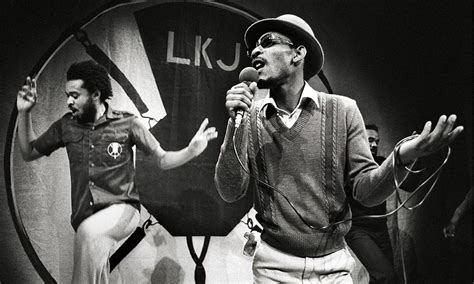
Johnson's influential albums, including Dread Beat an' Blood (1978), Forces of Victory (1979), Bass Culture (1980), LKJ in Dub (1980), and Making History (1983), have solidified his reputation as a pioneer of dub poetry and reggae. These albums feature timeless classics like "Dread Beat An' Blood," "Sonny's Lettah," "Inglan Is A Bitch," "Independent Intavenshan," and "All Wi Doin Is Defendin." Notably, his poem "Di Great Insohreckshan" serves as a powerful response to the 1981 Brixton riots, garnering attention even on BBC Radio 4 in 2007.


Johnson's artistic fusion of Jamaican "toasting" and reggae has positioned him as a significant precursor to the rap genre. Furthermore, his record label LKJ Records, established in 1981, has become a hub for talented reggae artists, including the Dub Band, with whom Johnson frequently collaborates. LKJ Records also showcases the work of other notable dub poets like Jean "Binta" Breeze and features past releases by artists like Mikey Smith. Johnson's contributions to music and poetry continue to resonate, leaving an indelible mark on the cultural landscape.

Legacy & Honours
Johnson's remarkable achievements and contributions have been recognised and honoured by numerous prestigious institutions and organisations throughout his career. In 1977, he was granted the esteemed C. Day-Lewis Fellowship, a testament to his exceptional talent and dedication to his craft. This recognition opened doors for him, leading to his appointment as the writer-in-residence for the London Borough of Lambeth that same year. This position allowed him to further immerse himself in the literary world and share his expertise with aspiring writers.
Over the years, Johnson's influence and impact continued to grow, earning him several honorary fellowships and awards. In 1985, he was appointed as an Associate Fellow of Warwick University, solidifying his reputation as a respected figure in the academic realm. Two years later, in 1987, he was honoured with an Honorary Fellowship from Wolverhampton Polytechnic, further highlighting his significant contributions to the field of poetry and popular music. In 1990, the city of Pisa recognised his outstanding achievements by presenting him with an award at the XIII Premio Internazionale Ultimo Novecento, underscoring his global influence and recognition.


Johnson's remarkable journey of accolades continued into the new millennium. In 2003, his alma mater, Goldsmiths College, University of London, bestowed upon him an honorary fellowship, a testament to his enduring impact on the literary world. The following year, in 2004, he was appointed as an Honorary Visiting Professor of Middlesex University, further solidifying his status as a revered figure in academia.
In 2005, the Institute of Jamaica recognised his distinguished eminence in the field of poetry by awarding him the silver Musgrave Medal, a highly prestigious honour. Finally, in 2012, English PEN honoured him with the Golden PEN Award, recognising his lifetime of distinguished service to literature. Johnson's contributions to the literary world are not only celebrated but also continue to inspire generations of writers and poets.


In October of 2014, it was announced that he would be honoured with the Jamaican national distinction, the Order of Distinction. Rhodes University in South Africa awarded him an Honorary Doctorate of Literature (D.Litt.) on April 20, 2017. In recognition of his dedication to political expression in his work, Johnson was presented with the prestigious PEN Pinter Prize in July 2020. The judges praised him as a "living legend" and highlighted his immense impact on the cultural landscape over the past fifty years.
Additionally, Johnson named Amanuel Asrat, an Eritrean poet, songwriter, and journalist, as the recipient of the "International Writer of Courage" award, which he shared with him. As the chair of 198 Contemporary Arts and Learning, an art gallery and educational institution in Brixton, Johnson plays a vital role in promoting artistic expression and learning.


LKJ's impact on the literary world is nothing short of extraordinary, with his contributions being both celebrated and revered by writers and poets across generations. His writing possesses a timeless elegance that captivates readers and leaves a lasting impression. Even today, LKJ's words continue to inspire and ignite the creative spark within aspiring writers, ensuring that his legacy lives on. The profound impact of his work serves as a testament to his talent and the enduring power of his literary prowess.