June 28th: Today's Feature
- Jun 27, 2025
- 5 min read
June
Oona Tamsyn King, Baroness King of Bow (born 22 October 1967) is a business executive and former British Labour Party politician. She was a Labour Member of Parliament for Bethnal Green and Bow from 1997 until 2005.

Early life
Oona King's background is a rich tapestry of diverse influences and notable family connections. Born in Sheffield, South Yorkshire, she is the daughter of an African-American academic, Preston King, and his Jewish British wife, Hazel King. Her family tree includes prominent figures such as her maternal aunt, the medical doctor Miriam Stoppard, and her cousin, the actor Ed Stoppard.
On her father's side, King hails from a lineage of American civil rights activists and successful entrepreneurs, with her paternal grandfather, Clennon Washington King Sr., being a notable civil rights activist. Her maternal grandfather was born Jewish, and her maternal grandmother converted to Judaism, adding another layer of cultural heritage to King's background. Through her grandmother, King is even related to Ted Graham, Baron Graham of Edmonton, as a first cousin once removed.


King's educational journey took her to Haverstock Comprehensive Secondary School in London, where she was in the company of future Labour politicians David Miliband and Ed Miliband. Her academic pursuits led her to the University of York for her undergraduate studies, where she briefly joined the Socialist Workers Party in her first year. However, it was during her second year that she received a scholarship to the University of California, Berkeley, where she excelled and graduated with a first-class honours degree in politics in 1990. This academic achievement marked the beginning of King's journey into the world of politics and social activism, setting the stage for her future endeavours in public service.
Political career
Before becoming a member of parliament, King was a researcher for the European Parliament. She also worked as a political assistant to Glyn Ford MEP, the Labour Party Leader in the European Parliament, and later Glenys Kinnock MEP. In 1995–97, she was a political organiser for the GMB Southern Region.


She was selected to represent the seat of Bethnal Green and Bow early in 1997. Peter Shore had announced his retirement early, but factional fighting in the constituency Labour Party led to party headquarters delaying the selection and imposing its own shortlist. Some leading candidates from the local Bangladeshi community were not included.
Parliamentary career
Winning the seat in 1997, King became the second black woman to be elected as a member of parliament, the first having been Diane Abbott. In her "truly first-class maiden speech", King described the racial abuse she and her family had suffered as a child. She referred to herself as "multi-ethnic", representing "a truly multicultural constituency where hardship and deprivation gave birth to Britain's greatest social reforms." She described William Beveridge and Clement Attlee as "surrounded by an East End infant mortality rate of 55%" and said this led to social reforms, including the NHS. She emphasised a need for coherence in the strategy for eradicating poverty, and the importance of education in its elimination.

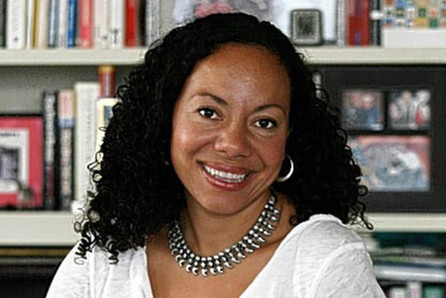
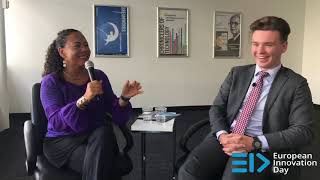
King served on the international development select committee, and as the vice-chair of the All-Parliamentary Group on Bangladesh. She was selected to second the Queen's Speech debate in November 2002, where she also discussed her views on genocide and a visit to Rwanda. King served as the Parliamentary Private Secretary to the Secretary of State for Trade and Industry and the Minister for e-commerce In 2003 she was selected as one of "100 Great Black Britons".
King supported the 2003 invasion of Iraq, which was controversial for her constituency's large Muslim population. In 2007, King said that she does not regret voting for the war in Iraq, "I could never have voted against getting rid of Saddam Hussein. He was responsible for the deaths of one million people." However, she had said in September 2005, after seeing how poorly the United States had handled the crisis of Hurricane Katrina and its aftermath in New Orleans, that:
it shows that America has no grasp whatever on the activity needed to rebuild a destroyed city. And if they can't do that in their own country, then it's obvious why they can't do it in Iraq. So ... I regret that we went to war with a country that has shown itself to be incapable of the very basic actions required to deal with post-conflict reconstruction.


In 2007, King published her autobiography, The Oona King Diaries: House Music.
In 2008, Prime Minister Gordon Brown appointed her to act as his Senior Policy Adviser on Equalities and Diversity and Faith.
In January 2009, King was appointed head of diversity at Channel 4. Before relocating to the United States she lived in Mile End, in a converted pub, in the East End of London.
2010 London Mayoral Campaign
In 2010, King unsuccessfully challenged Ken Livingstone for the Labour Party nomination in the 2012 election for Mayor of London. King's first campaign speech, at Haverstock school, focused on "engagement with young people" as a way of reducing knife crime and helping them achieve their potential. In June 2010, she was shortlisted for the nomination. In an interview with The Independent, King emphasised both her experience of "pushing and pulling the levers of power", i.e. her experience of negotiating with top ministers, and also her willingness to work with political opponents.



Peerage
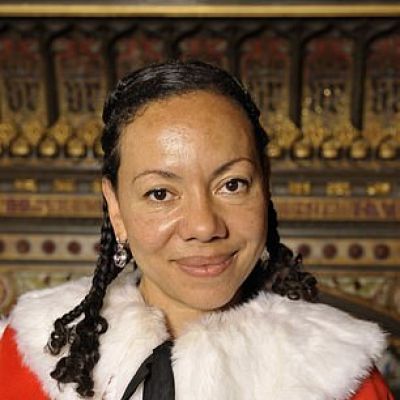
On 26 January 2011, King was created a life peer as Baroness King of Bow, of Bow in the London Borough of Tower Hamlets. She was introduced in the House of Lords on 31 January 2011, where she sat on the Labour benches. When her appointment was announced in November 2010, she resigned as a constituency representative to the Labour National Executive Committee, to which she had recently been elected, before attending her first meeting. Upon taking her seat in the Lords, King stood down from her Diversity Officer role with Channel 4.


In 2012, King was elected to the Progress strategy board as a parliamentarian.
In 2016, she took a leave of absence from the Lords to take a role as YouTube Diversity Director.
In 2019, she left Google to join Snap, Inc. as their first VP of diversity and inclusion. King was also listed in the annual Powerlist as one of the most influential people of African/African-Caribbean descent in the UK.



Media work
King has made appearances on television shows such as This Week, The Daily Politics, The All Star Talent Show and Have I Got News for You. She hosted a BBC Two documentary on Martin Luther King Jr. and the deep South entitled American Prophet, aired on 29 March 2008. She made appearances on the new comedic show Jews at Ten on Channel 4, 9 October 2012. In January 2013, she appeared on the ITV skating show Dancing on Ice, being voted off on 20 January.
Legacy
Oona King's background is a captivating blend of various influences and remarkable family ties. Her unique heritage has shaped her perspective and given her a deep understanding of the complexities surrounding poverty eradication. With a strong emphasis on coherence, she advocates for a comprehensive strategy that addresses the root causes of poverty and ensures a sustainable solution.


Drawing from her own experiences, Oona King recognises the pivotal role education plays in breaking the cycle of poverty. She firmly believes that education is not only a fundamental right but also a powerful tool for empowerment. By providing quality education to all, we can equip individuals with the necessary skills and knowledge to uplift themselves and their communities. Oona King's unwavering commitment to education as a means of eliminating poverty underscores her dedication to creating a more equitable society.