June 30th: Today's Feature
- webbworks333
- Jun 29, 2025
- 6 min read
June
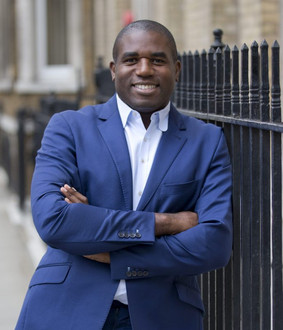
David Lammy (born 19 July 1972) is an English politician and lawyer serving as Shadow Secretary of State for Foreign, Commonwealth and Development Affairs since 2021. A member of the Labour Party, he has been Member of Parliament (MP) for Tottenham since the 2000 Tottenham by-election.

Early Life & Career
David Lammy has had an illustrious career in politics, serving in various important roles under different administrations. From his time as a minister under Tony Blair and Gordon Brown to his current position in Keir Starmer's Shadow Cabinet, Lammy has consistently shown dedication and commitment to public service. His experience as Shadow Secretary of State for Justice and Shadow Secretary of State for Foreign, Commonwealth and Development Affairs highlights his expertise in crucial policy areas.
Born in London to Guyanese parents, Lammy's upbringing and early life experiences have shaped his views on important social issues. Raised by a single mother after his father left the family, Lammy understands the challenges faced by families and the importance of fatherhood in children's lives. His work in advocating for fathers' involvement in their children's upbringing through the All-Party Parliamentary Group on Fatherhood demonstrates his commitment to supporting families and promoting positive parenting roles.


Educated at prestigious institutions such as the School of Oriental and African Studies and Harvard Law School, Lammy's academic background has equipped him with the knowledge and skills necessary for his roles in law and politics. His experience working as an attorney in California further adds to his expertise in legal matters. As a visiting professor at SOAS, Lammy continues to contribute to the academic community, sharing his insights and knowledge with the next generation of students.
Parliamentary Career
In the year 2000, David Lammy achieved a significant milestone by being elected for the Labour Party on the London-wide list to the London Assembly. Following the unfortunate passing of Bernie Grant during the London election campaign, Lammy was chosen as the Labour candidate for Tottenham. He went on to secure the seat in a by-election held on 22 June 2000, garnering an impressive 53.5% of the vote and a substantial majority of 5,646. At the youthful age of 27, Lammy became the youngest Member of Parliament (MP) in the house, a title he held until 2003 when Sarah Teather was elected.


Lammy's success continued as he was re-elected as the MP for Tottenham in the 2001 general election, achieving an even higher vote share of 67.5% and an increased majority of 16,916. His dedication and hard work did not go unnoticed, as in 2002, Prime Minister Tony Blair appointed him as Parliamentary Under-Secretary of State in the Department of Health. Subsequently, in 2003, Lammy received another appointment from Blair, this time as a Parliamentary Under-Secretary of State in the Department for Constitutional Affairs. Despite being a member of the Government, Lammy voted in favour of Britain's authorisation to invade Iraq in 2003.
Following his re-election in the 2005 general election, Lammy was once again appointed to a ministerial position by Blair, this time as Minister for Culture at the Department of Culture, Media and Sport. However, in June 2007, under the new leadership of Prime Minister Gordon Brown, Lammy was demoted to the rank of Parliamentary Under-Secretary of State in the Department for Innovation, Universities, and Skills. Brown later recognised Lammy's capabilities and promoted him to Minister of State in October 2008, also appointing him to the Privy Council. In June 2009, Brown entrusted Lammy with the role of Minister for Higher Education in the newly formed Department for Business, Innovation, and Skills, where he led the Commons ministerial team under the leadership of Lord Mandelson as Secretary of State.



Political Views
Lammy has been a vocal advocate for the rights and fair treatment of black and minority ethnic individuals, especially the younger generation, within the criminal justice system. His speeches and addresses have shed light on the disparities and biases faced by these communities, particularly in relation to crime and punishment. By highlighting the challenges and injustices faced by these groups, Lammy has brought attention to the urgent need for reform and change within the system.


In various instances, Lammy has pointed out the systemic issues that contribute to the overrepresentation of black and ethnic minority youth in the criminal justice system. He has emphasised the need for a more equitable approach to dealing with young offenders, proposing innovative solutions such as deferred prosecution for first-time offenders. By advocating for these changes, Lammy aims to address the root causes of disproportionate incarceration rates and ensure that all individuals are treated fairly and justly within the legal system.
Outspoken Advocate
Furthermore, Lammy has not shied away from holding government officials and policymakers accountable for their role in perpetuating inequality and failing to address the underlying issues that lead to crime and violence. By calling out leaders such as Boris Johnson, Amber Rudd, and Sadiq Khan for their lack of action in the face of rising stabbings and youth unemployment, Lammy has demonstrated his commitment to advocating for meaningful change and social justice. His unwavering dedication to fighting for the rights of marginalised communities continues to inspire others to join the cause for a more just and equitable society.





Lammy has been an outspoken advocate for social justice and equality throughout his career. One of his notable contributions was his commentary on Britain's history of slavery, where he shed light on the injustices faced by generations of black individuals who were forced into slavery. He also criticised the University of Oxford for its lack of diversity, particularly in admitting black students and those from disadvantaged backgrounds. Lammy firmly believes that these individuals, who have contributed to British society and consider it their home, deserve better treatment and opportunities.
Lammy's commitment to equality extends beyond racial issues. In 2013, he delivered a powerful speech in the House of Commons in support of the Marriage (Same Sex Couples) Bill. He drew attention to the discrimination faced by same-sex couples in Britain, comparing it to the "separate but equal" doctrine that justified racial segregation in the United States. Lammy's speech highlighted the importance of equal rights for all individuals, regardless of their sexual orientation.


Lammy's dedication to combating discrimination and prejudice is evident in his efforts to address antisemitism within the Labour Party. He has actively spoken out against antisemitic behaviour and attended rallies to show his support. Lammy believes that the resurgence of antisemitism is a result of the rise of extremism, which has had a detrimental impact on the Jewish community's trust and support for the Labour Party. His commitment to fighting discrimination extends to his work as a documentary filmmaker, as seen in his Channel 4 documentary, "The Unremembered: Britain's Forgotten War Heroes." In this documentary, Lammy sheds light on the injustice faced by African soldiers who served Britain during World War I but were denied individual graves, despite the Commonwealth War Graves Commission's supposed commitment to equality.


Lammy's work serves as a reminder of the importance of recognising and honouring the contributions of all individuals, regardless of their background or ethnicity.
The eye-opening documentary served as a catalyst for an extensive investigation conducted by the Commonwealth War Graves Commission. The subsequent report shed light on a deeply ingrained issue of "pervasive racism" that had been the underlying cause of the inadequate commemoration of fallen service personnel. Shockingly, the report revealed that a staggering number of approximately 54,000 casualties from specific ethnic groups were denied the same level of remembrance as their white counterparts. Furthermore, an astonishing 350,000 military personnel hailing from East Africa and Egypt were not commemorated by name or even acknowledged at all.


In a remarkable turn of events, Prime Minister Boris Johnson took the responsibility upon himself and issued an unequivocal apology in April 2021, acknowledging the distressing findings of the review. This sincere apology was further reinforced by Secretary of State for Defence Ben Wallace, who expressed remorse in the House of Commons and vowed to rectify the situation by taking decisive action. The gravity of the situation was not lost on David Lammy, who played a pivotal role in bringing this matter to the forefront. He described this moment as a "watershed moment," signifying the significance of the government's acknowledgment and commitment to addressing the issue.


Legacy
Lammy, a proud Englishman of African and Caribbean heritage, has consistently emphasised his identity as English, despite his dual heritage. In a notable incident during his appearance on LBC in March 2021, Lammy firmly rejected a caller's assertion that his African-Caribbean descent and English nationality were incompatible. By asserting his Englishness, Lammy challenges the notion that one's ethnic background should hinder their sense of national identity. His unwavering stance highlights the importance of inclusivity and acceptance, encouraging a society where individuals can embrace their diverse heritage while still identifying as English.