July 4th: Today's Feature
- webbworks333
- Jul 3, 2025
- 6 min read
July
Ian Edward Wright OBE, (born 3 November 1963) is a renowned English television and radio personality who has had an illustrious career both on and off the football pitch.

Early Years
Born in London in 1963 to Jamaican parents, Ian Wright faced a challenging childhood. With an absent father, he and his two older brothers were raised by their mother and stepfather. In his autobiography, A Life in Football, Ian candidly shared the difficulties he experienced growing up. His mother struggled with alcoholism, while his stepfather was a "bully". Fortunately, Ian found support and guidance from his teacher, Sydney Pigden, who became a surrogate parent figure. Sydney played a crucial role in keeping Ian focused and nurturing his passion for football.
Ian Wright's marital journey has seen its ups and downs. His first marriage to Deborah, which began in Mauritius in 1993, unfortunately came to an end in 2004 after nine years together. Ian openly admitted his infidelity in his memoir, expressing deep regret for the pain he caused.

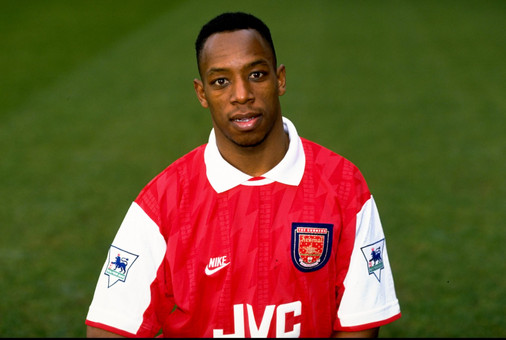


However, love found its way back into Ian's life when he married Nancy Hallam in 2011. Interestingly, Nancy had no prior knowledge of Ian's football career when they first crossed paths in a pub in Notting Hill. Ian fondly recalls how Nancy's lack of football knowledge actually charmed him, solidifying his belief that she was the one for him.
Time to Think
Following a period of financial hardship, during which his then wife, Deborah, was pregnant with their first child, Wright found himself incarcerated in Chelmsford Prison for a duration of 32 days. The reason behind his imprisonment was his failure to pay fines for driving without tax or insurance. The moment he was confined to his cell, an overwhelming wave of emotions overcame him, leading him to break down in tears. In that vulnerable moment, he made a solemn promise to God, vowing to utilise every ounce of his strength and determination to succeed as a professional footballer. This pivotal moment marked the beginning of a transformative journey for Wright, as he embarked on a path that would ultimately lead him to greatness.


Success in Football
As a former professional footballer, he achieved remarkable success with London clubs Crystal Palace and Arsenal, leaving an indelible mark on the sport. Spending six years with Crystal Palace and seven years with Arsenal, Wright's contributions were instrumental in their triumphs. With Arsenal, he not only secured the prestigious Premier League title but also triumphed in the major domestic cup competitions and the European Cup Winners Cup. His exceptional attributes, including speed, agility, finishing, and aggression, made him a formidable force on the field. Throughout his career, he showcased his skills in 581 league games, scoring an impressive 287 goals for seven clubs in Scotland and England. Additionally, Wright represented the England national team, earning 33 caps and scoring nine international goals.



In addition to his stints with Crystal Palace and Arsenal, Wright also showcased his talent in other prominent leagues. He graced the Premier League with West Ham United, leaving a lasting impact on the club. Furthermore, he ventured into the Scottish Premier League, playing for Celtic and displaying his prowess on a different stage. Wright's versatility and adaptability were evident as he also competed in the Football League, representing Burnley and Nottingham Forest. His contributions to these clubs further solidified his reputation as a remarkable footballer. As of 2023, Wright holds the esteemed position of being Arsenal's second-highest scorer of all time, a testament to his exceptional abilities. Similarly, he ranks as Crystal Palace's third-highest scorer, leaving an enduring legacy at the club.


After football...TV Career!
Following his retirement from professional football, Ian Wright seamlessly transitioned into the media industry, where for may years he has continued. to make a significant impact. Known for his charismatic personality and deep understanding of the sport, he has become a prominent figure in football-related TV and radio shows. Wright's insightful analysis, engaging commentary, and infectious enthusiasm have captivated audiences worldwide. His ability to articulate his thoughts and provide expert opinions have made him a sought-after pundit, enhancing the overall viewing experience for football enthusiasts. Moreover, Wright's influence extends beyond his own career, as two of his sons, Bradley and Shaun, have followed in his footsteps and enjoyed successful careers as professional footballers. This remarkable family legacy further solidifies Wright's status as a true icon of the sport.




JPW………………………..............................……

In his own Words
Ian Wright spent the majority of his professional career at Crystal Palace and Arsenal, while also winning 33 caps for England.
"That's my secret, Cap. I'm always angry."
Ian Wright can relate to that classic Bruce Banner line, the one uttered by the Marvel character as he's about to turn into the Hulk.
Not because the former England striker is a superhero in the eyes of many Arsenal and Crystal Palace fans, but because, in his words, "for a large part of my life, I was angry. I was always angry”.
Wright is aware his story is traditionally told as one of those "never give up on your dreams" tales - not turning professional until he was 21, working as a labourer, spending a month in prison.


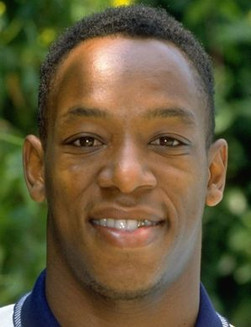

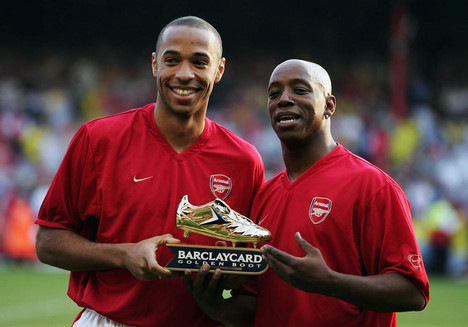
In reality, he says his road to professional football was "11 years of failure", crying himself to sleep, getting into fights in Sunday League and trying to deal with his stepfather's cruelty.
In an open and honest piece for Wright explains how he wasn't born with that happy-go-lucky gold-toothed smile you see on Match of the Day on a Saturday night. He earned it the hard way.


Match of the Day - from torture to 'Graceland'
Wright was born in Woolwich, South London, before moving to a house share with his family in Brockley and then on to a home of their own.
But Wright would spend as much time as he could kicking a tennis ball against a wall outside, in part to avoid being bullied by his stepbrother and, in particular, his stepfather.
"He was a weed-smoking, gambling, coming-home-late kind of guy," said Wright.
"I don't know why, but he didn't like me in particular."
One of the things that got to football-mad Wright the most was being forced to stand and look the other way when Match of the Day came on.




"My stepdad used to take that away from us," he added. "Just because he could.
"Depending on what mood he was in, he'd come into the bedroom just before it started and he'd say, 'Turn around. Turn around to the wall'.
"We had to face the wall the whole time Match of the Day was on. And the really cruel thing was that we could still hear everything. It was awful. I would cry myself to sleep whenever he did it.”
Wright says that stayed with him for years whenever the Match of the Day theme music would come on.

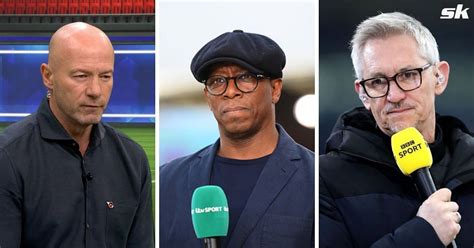
"I'll be honest with you, it still gets to me every now and again," he added.
"The first time I went on the show as a presenter, Des Lynam walked up to me and said, 'Ian Wright, welcome to Match of the Day’.
"I nearly broke down crying. I told Des, 'This is my Graceland’."
'I spent so much of my life angry and trying to catch up’.
In his Players' Tribune piece, Wright talks about being rejected by Brighton after a six-week trial and almost blowing his chance at Crystal Palace, going to prison for not paying his driving fines and adopting Shaun Wright-Phillips after meeting his mother, Sharon, aged 19.



It was two years later the labourer got his professional break at Palace, despite turning the Eagles' first offer down, but when Wright scored twice after coming on as a substitute in the 1990 FA Cup final against Manchester United, it was the advice of former teacher Sydney Pigden that stuck in his mind.
Wright says the teacher was "the one man in particular who helped me through those dark times" as a child who could barely read or write: "He changed my life.”
Mr Pigden taught him how to read and write, but also how to deal with his anger, how to have patience, be confident, communicate and take responsibility.
"He was the first man who showed me any kind of love," said Wright.
"When I played for England he called it the proudest moment of his life. Imagine that. This schoolteacher, who'd done stuff like been a pilot in the Second World War, who'd flown over Buckingham Palace… and he says his proudest moment was watching some kid who went to his school play football.”

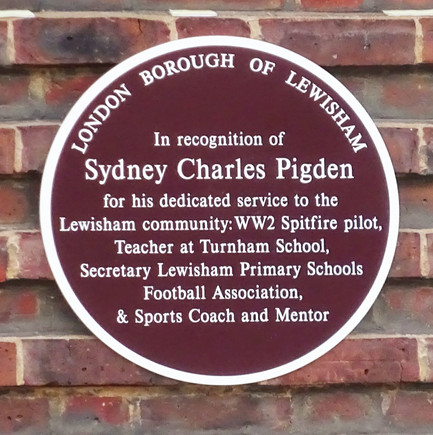

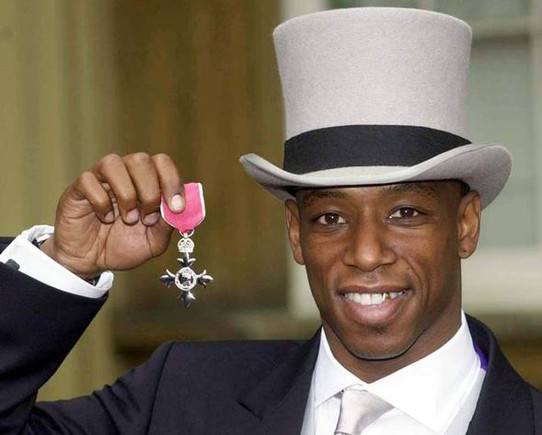
Mr Pigden passed away last year at the age of 95.
"He's still with me. He'll always be with me," said Wright.
Now, as a father and a grandfather, Wright says he is "working on giving back" and wants to see football easily accessible to those who enjoy it, both on and off the pitch.
"The truth is, I spent so much of my life angry and trying to catch up after a bad start," he added.




"Maybe now that you've read my story, you'll see me on the television flashing a smile and you'll really understand that I wasn't born with it. I earned it.”