July 24th: Today's Feature
- Jul 23, 2025
- 5 min read
July
Lenford Alphonso Garrison
(13/6/1943 – 18/2/2003) also known as Kwesi, was a prominent figure in the field of education, community activism, and history. Throughout his life, he dedicated himself to documenting the evolution of the black British identity and history, as well as supporting and showcasing the talents of young black writers. His passion for these causes led him to establish ACER (Afro-Caribbean Education Resource) and play a key role in founding the Black Cultural Archives.

Garrison's legacy continues to inspire and empower individuals to embrace their cultural heritage and celebrate diversity. His contributions have had a lasting impact on the educational landscape and cultural awareness in the UK. Through his tireless efforts, he has left behind a rich legacy that continues to shape and influence the narrative of black British identity and history.
Family & Education
Len Garrison, a native of St Thomas, Jamaica, was born to parents who had migrated to Britain in the early 1950s. His father, Ernest Samuel Garrison, originally from Hopewell, Hanover, was a skilled cabinet maker, while his mother, Albertha Adassa Garrison, hailing from Somerset, St Andrew, was a dedicated school teacher. Len joined his parents in west London in 1954, just before the arrival of his first British sibling, Janet, in May 1954. Subsequently, his brothers Owen, Albert, and Michael were born in July 1955, October 1957, and November 1959, respectively.


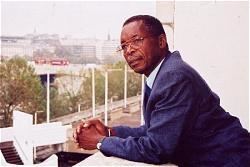
Len Garrison's journey towards becoming a renowned figure in the fields of photography and education began with his early passion for photography, which he pursued by studying at King's College London. His career as a specialist medical photographer at Guy's Hospital and as a freelance photographer for the West Indian Gazette laid the foundation for his future endeavours. His academic pursuits led him to Ruskin College in 1971, where he obtained a diploma in development studies, followed by a BA in African history and Caribbean history from the University of Sussex. Furthering his education, he earned an MA in local history from Leicester University. In 1987, Len married Marie, and they welcomed their son, Tunde, into the world on 10 December 1990.
Publications
After completing his studies at Sussex, Garrison was selected to showcase Britain's cultural richness at FESTAC - the Festival of Arts and Culture in Nigeria in 1977 (Festac Town). His presentation at the event was centred around his dissertation on the Rastafarian movement, which he had meticulously researched and written during his time at Ruskin College.
Ansel Wong's introduction to Garrison's 1965 poetry book, Beyond Babylon, sheds light on the fact that the dissertation eventually evolved into a full-fledged book. This book, titled Black Youth Rastafarianism and Identity Crisis in Britain, has been so well-received that it is now in its second reprint, highlighting the significance and impact of Garrison's work in exploring the complexities of Rastafarianism and youth identity in the British context.
Work & Legacy
ACER
In his groundbreaking work on Rastafari and identity, Garrison highlighted the critical issue of the British education system failing black children by neglecting to acknowledge the significance of black history and culture. He passionately argued that black children, if given the right opportunities, could not only thrive but also contribute positively to British society. This led to the establishment of ACER (Afro-Caribbean Education Resource) with the primary goal of providing black children with a strong sense of identity and pride in their African heritage, ultimately shaping them into valuable black British citizens in a diverse society.


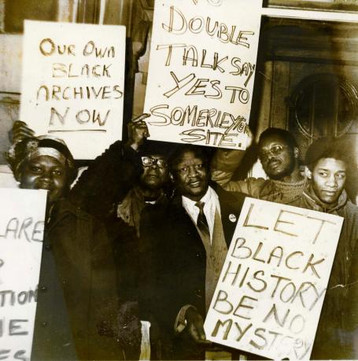


Garrison envisioned ACER as a vital repository of Black history, serving as a valuable resource for developing educational materials tailored to students of all ages and abilities. Through relentless advocacy efforts, he successfully secured funding and resources for the ACER project, which was officially launched in 1977 under his directorship. The educational packs developed by ACER, particularly the Young Penmanship awards for creative writing, played a pivotal role in empowering black youth to express their realities and experiences as British citizens of African descent.
Despite facing challenges such as the closure of ACER in 1988 due to funding issues, the legacy of ACER lives on through its significant impact on the inclusion of black history in the mainstream British educational curriculum. Furthermore, ACER's innovative approach has inspired other countries like the Netherlands to adopt similar multi-cultural learning initiatives. The success stories of individuals like Michael McMillan, Nicola Williams, Clive Davis, and Dr. Michael Beckles, who benefited from ACER's programs, serve as a testament to the enduring influence of ACER's mission in promoting diversity and inclusivity in education.

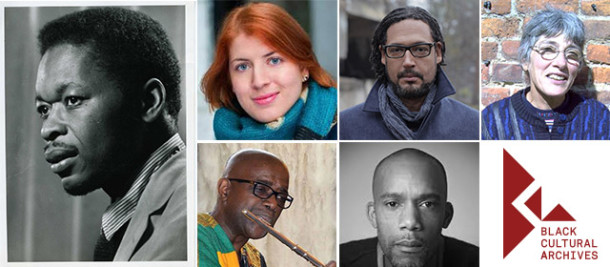
During the late 1980s, Garrison brought the ACER concept to Nottingham and assumed the role of director at the ACFF (African Caribbean Family and Friends) Centre. His influence was pivotal in the creation of EMACA, which stands for East Midlands African Caribbean Arts, an organisation dedicated to fostering a vibrant cultural scene, with a specific focus on the black visual arts. Additionally, he played a significant role in the development of local history initiatives centred around George Africanus, a trailblazing figure who holds the distinction of being Nottingham's first black entrepreneur.
Black Cultural Archives
Garrison's vision of creating a fully multicultural British society through the proper documentation and celebration of black history was brought to life through the establishment of the Black Cultural Archives (BCA) in 1981, where he served as a trustee.


The BCA's primary goal is to address the historical omission of black people of African descent from Britain's official history by ensuring that their significant contributions are recognised and preserved for future generations.
With the BCA receiving substantial funding in 2010 and relocating to Brixton to become the UK's first national black heritage centre, Garrison's dream of a more inclusive and diverse society was one step closer to reality.


The unveiling of a bust of Garrison at the launch of the new BCA in Windrush Square in 2014 symbolised the lasting impact of his efforts in reshaping the narrative of black history in Britain and beyond.
Honour & Legacy
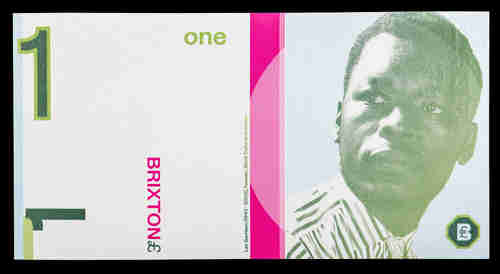
The esteemed figure of Garrison has been immortalised on the banknotes of the Brixton pound, the independent currency of Brixton. This recognition is a testament to Garrison's significant contributions and lasting impact on the community.



Garrison's remarkable achievements has earned him a well-deserved place among the 100 Great Black Britons who have played a pivotal role in shaping the nation. His inclusion in this prestigious list, compiled in 2003 and again in 2020, highlights the profound influence Garrison has had on British society.
Patrick Vernon, in his book titled "100 Great Black Britons," pays homage to Garrison and his extraordinary legacy. By featuring Garrison's story alongside other influential figures, Vernon ensures that his contributions are acknowledged and celebrated for generations to come.