July 25th: Today's Feature
- webbworks333
- Jul 24, 2025
- 6 min read
July
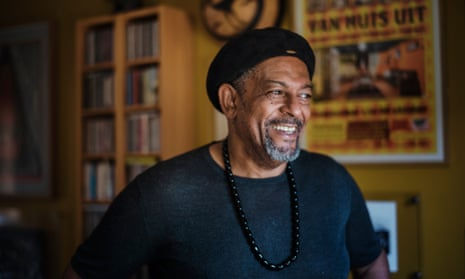
Michael McMillan, a renowned British playwright, artist, curator, and educator, was born in England in 1962 to parents who migrated from St Vincent and the Grenadines (SVG). With a strong academic background, McMillan's research focuses on various aspects such as the creative process, ethnography, oral histories, material culture, and performativity. His expertise in these areas has led him to become the author of several plays and an accomplished artist.

One of McMillan's notable achievements as an artist was his first installation called "The West Indian Front Room," which was showcased at the Geffrye Museum in 2005. This installation not only captivated audiences but also served as an inspiration for a BBC Four documentary titled "Tales from the Front Room" in 2007. Furthermore, it led to the creation of a website and a book in 2009, titled "The Front Room: Migrant Aesthetics in the Home." McMillan's talent and creativity have also been recognised internationally, with commissions such as "Van Huis Uit: The Living Room of Migrants in the Netherlands" in 2007-08 and "A Living Room Surrounded by Salt" in Curaçao in 2008.
In addition to his artistic endeavours, McMillan has expressed his passion for painting and the fine arts. He describes himself as a painter before being a playwright or dramatist. Through his exploration of live art pieces and critical writing on performance, photography, and visual arts culture, he has found his way back to the world of fine arts. McMillan's mixed-media installations, influenced by his background in performativity, can also be seen as theatre sets. His interdisciplinary approach to his work, incorporating mixed media, installations, and performance, showcases his versatility and creativity.


Life and Career
Michael McMillan, born in 1962 in High Wycombe, UK, has a rich cultural heritage stemming from his Caribbean migrant parents. Growing up, he was exposed to a diverse linguistic environment, which greatly influenced his upbringing. His parents, who hailed from St Vincent & the Grenadines, brought with them a unique blend of English culture and Caribbean creole. This fusion of languages shaped McMillan's early years, as he became fluent in his parents' creole, the Jamaican English spoken in his neighbourhood, and the standard London English spoken at school.
Despite his multicultural background, McMillan's academic pursuits were focused on sociology and African and Asian studies. He attended Sussex University, where he delved into these subjects and graduated in 1984. However, his passion for the arts and storytelling led him to pursue a Master's degree in Independent Film & Video from Central Saint Martins in London in 1991. This interdisciplinary approach allowed him to explore his creativity through visual mediums, further enhancing his ability to express himself and connect with diverse audiences.

McMillan's dedication to education and the arts is evident in his extensive experience as a writer, educator, and researcher. He served as a Royal Literary Fund Writing Fellow at the London College of Communication from 2000, providing valuable guidance and support to aspiring writers.
His expertise in creative writing led to his appointment as a Visiting Professor at the University of the Arts London (UAL) in 2003. Additionally, he contributed to the cultural and historical studies curriculum at the London College of Fashion (LCF), enriching students' understanding of the arts and society. Recognising his contributions, Middlesex University awarded him an Arts Doctorate in 2010, solidifying his status as a respected figure in the field.
McMillan's commitment to the arts extended beyond academia, as he served as an artist-in-residence in North Wales, focusing on the intersection of arts and health and well-being in 2010-11. Through his diverse experiences and expertise, McMillan continues to inspire and empower individuals through the power of language and storytelling.
Writing
McMillan's passion for oral history and the narratives of first-generation Caribbean immigrants shines through in his early works like Brother to Brother (1996) and The Black Boy Pub & Other Stories (1997). These pieces were crafted using recordings of interviews conducted during his year-long stay in High Wycombe, a town where many migrants from St. Vincent and the Grenadines had made their home. Through these writings, McMillan captures the essence of their experiences and sheds light on their struggles and triumphs in a new land.
As a playwright, McMillan's talent has been recognised and showcased in prestigious venues such as the Royal Court Theatre, Channel 4, and BBC Radio 4, as well as various locations throughout the UK. His play The School Leaver, written at the young age of 16 and published by the Black Ink Collective in 1978, has been widely acclaimed and reprinted multiple times. Additionally, his repertoire includes other notable works like Master Juba (2006), Babel Junction (2006), and a unique adaptation of Bertholt Brecht's The Good Person of Sezuan, transposed to Jamaica in the 1980s.



Beyond his creative endeavours, McMillan has also made significant contributions to the academic and literary spheres through his essays, articles, and presentations at various conferences and symposiums worldwide. His insightful discussions on language, literature, and history have been well-received in national and international publications, showcasing his deep understanding of the cultural landscape. Notably, his role as a keynote speaker at the "Islands in Between" Conference in 2006 further solidifies his position as a respected voice in the field of Caribbean studies.
Installations
McMillan's artistic endeavours extend beyond teaching to encompass mixed-media exhibitions and publications. His initial installation, The West Indian Front Room, delves into the memories of his parents and others who migrated to Britain post-World War II, exploring the construction of diaspora, identity, race, class, and gender within the domestic interior. By recreating a typical front room from the 1970s, McMillan prompts viewers to question the complexities of cultural representation and societal norms.


Stuart Hall, a prominent cultural theorist, highlights the significance of the front room in black domestic life, emphasising its conservative nature and the layers of complexity it embodies. McMillan's installation challenges the conventional perceptions of the front room, shedding light on the formal codes of behaviour associated with this space and the intricate interplay of aesthetics and functionality. Through a meticulous selection of furniture, ornaments, and soft furnishings, McMillan creates a visual narrative that invites contemplation on the nuances of cultural heritage and personal history.
In a reflective piece for The Guardian, McMillan candidly shares his childhood experiences in the front room, recounting moments of aesthetic discomfort and nostalgia. The mismatched wallpaper and carpet, coupled with the nostalgic tunes of Jim Reeves emanating from the Blue Spot radiogram, evoke a sense of longing for a bygone era. By encapsulating the essence of the Victorian parlour within his installation, McMillan invites viewers to immerse themselves in a world where memories and emotions converge, transcending the boundaries of time and space.


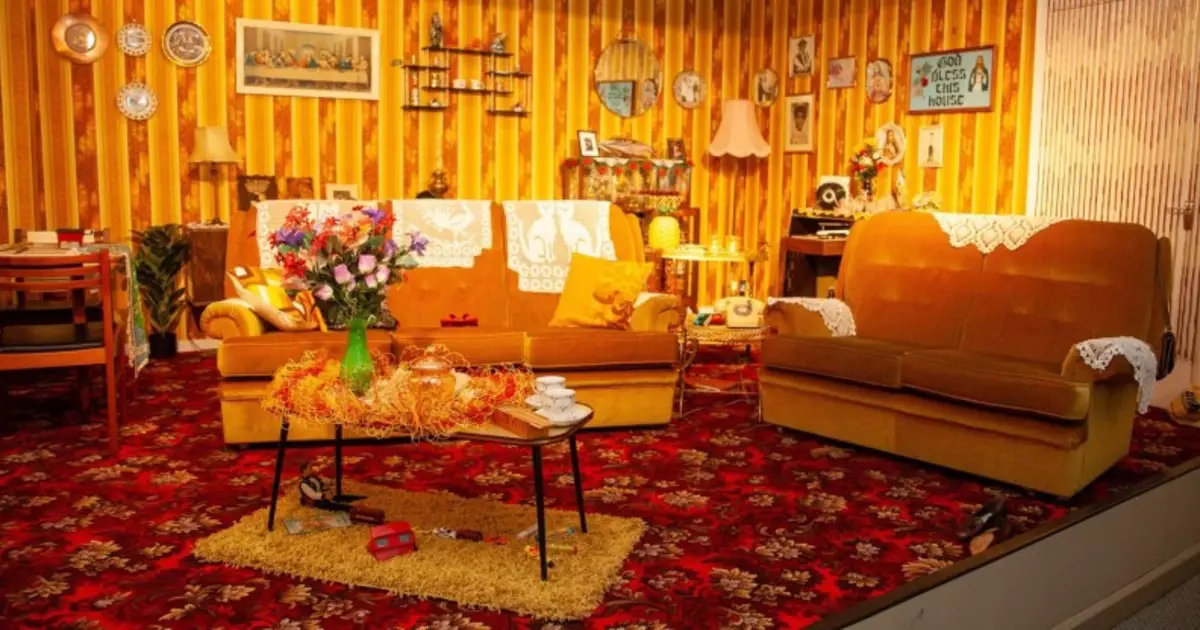
The Geffrye Museum in London hosted a highly praised exhibition in October 2005 that drew in over 35,000 visitors from diverse backgrounds, showcasing the universal appeal of the display. This exhibition has been recreated in various countries and cultural contexts, such as the Netherlands and Curaçao, demonstrating its global impact. Additionally, a documentary titled Tales from the Front Room was aired on BBC4 in 2007, further spreading the influence of the original exhibition. The creator of this exhibition has also given talks at prestigious institutions like the University of Wisconsin-Madison, Clark University, and Northwestern University, solidifying the significance of the project.
Another notable exhibition by the same artist was The Beauty Shop in 2008 at the 198 Gallery in south London, which aimed to blur the lines between art and performance. Visitors were encouraged to engage with the installation as if they were part of a theatrical experience, adding a unique dimension to the viewing process. This innovative approach to art curation showcases the artist's commitment to pushing boundaries and creating immersive environments that captivate audiences.



In more recent years, the artist has continued to make an impact with installations like the recreation of the Walter Rodney Bookshop as part of the No Colour Bar exhibition at the Guildhall Art Gallery. Additionally, the thought-provoking installation Doing Nothing Is Not An Option pays tribute to the legacy of Ken Saro-Wiwa by exploring the connections between the local community in Peckham and the memory of the Nigerian writer and activist. These projects highlight the artist's ability to engage with important social and cultural issues through immersive and interactive installations that resonate with audiences on a profound level.
Overall, Michael McMillan's contributions to the arts and academia are truly remarkable. His research, plays, installations, and writings have not only garnered recognition but have also provided valuable insights into various aspects of culture, migration, and performativity. Through his diverse body of work, McMillan continues to inspire and engage audiences worldwide.