September 23rd: Today's Feature - Ford Dagenham & Equality
- Sep 23, 2025
- 6 min read
September
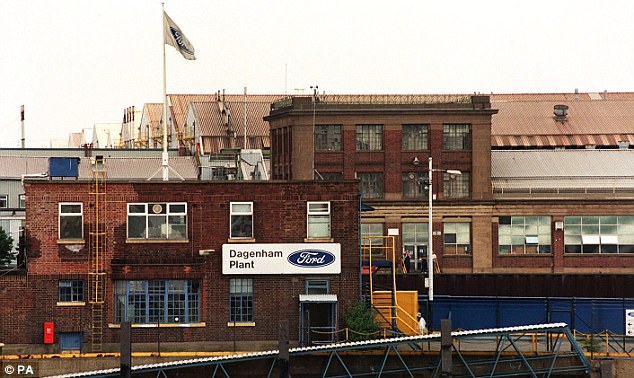
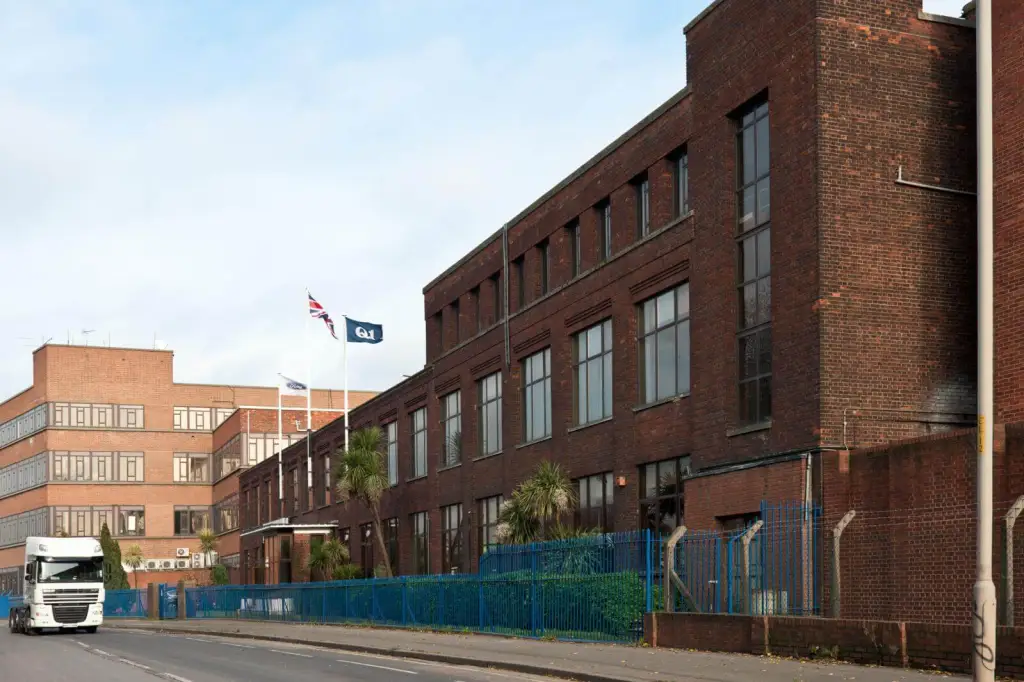
Ford Dagenham is a major automotive factory located in Dagenham, London, operated by the Ford of Britain subsidiary of Ford Motor Company. The plant opened in 1931 and has produced 10,980,368 cars and more than 39,000,000 engines in its history. It covers around 475 acres and has received over £800 million of capital investment since 2000.
From Heritage calling:
After arriving in the 1950s, people from the Caribbean, Africa and Asia
were often forced to live in the poorest areas or where work was plentiful, such as London, Birmingham, Leeds and Manchester.
Some employers, such as the NHS and London Transport, recruited people from the Caribbean. Others were employed on British Rail or by the big car manufacturers such as Fords in Dagenham and British Leyland in Longbridge, Birmingham.

From Sage Publishing:
When thinking about best practice examples of diversity and women’s rights, Ford’s manufacturing plant in Dagenham doesn’t immediately spring to mind. With a workforce that is still 92 per cent male, the traditional stereotypes of a politically incorrect factory floor are still predominant.
But Jenny Ball and three other female colleagues have broken the mould with their recent appointments to lead HR functions in the four business units at the plant.
‘We all do our jobs as managers first and foremost, but we also have ambassadorial roles too’, said Ball, who went on to aver that ‘I suppose as the first all-woman HR team in Dagenham, we are role models, but really we don’t think about that most of the time’.
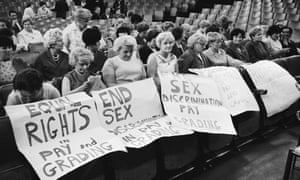
Ford at Dagenham has had a patchy history concerning equality. In 1968, a group of female sewing machinists went on strike against a sex-biased grading structure. The 1970 Equal Pay Act followed shortly after (the movie, Made in Dagenham, highlights the plight of some female employees seeking equality).
In the late 1960s, investigations into race discrimination complaints were a regular part of the Ford HR territory, though the company was among the first to have ethnic monitoring.


Matters came to a head in the 1990s when Sukhjit Parmar, a Dagenham engine plant worker, won a claim of racial discrimination and victimization, and an advertisement showing Ford workers with faces changed to disguise their ethnic origins provoked unfavourable publicity. Global president Jacques Nasser flew in from Detroit to take personal control of the growing crisis.
The result was a comprehensive agreement with unions to stamp out discrimination and harassment. Among other things, it provided for joint equal opportunities committees in every Ford plant and business throughout the UK, backed up by anti-racist policies for promotion, recruitment and corporate image-making. At the time, union leader Bill Morris hailed it as ‘the fresh start that Dagenham needs’.
BBC Report:
A year after Ford pledged to crack down on racism at its Dagenham plant, the BBC has obtained fresh allegations of bullying.
In September 1999, the company apologised to an Asian worker, Sukhjit Parmar, who had suffered years of racial abuse and threats from colleagues at the Essex plant.
At an employment tribunal, Ford accepted full responsibility. The company's global president announced a package of measures to stamp out workplace racism.
But Mr Parmar, who no longer works for Ford, said his former colleagues have told him racist abuse is continuing.


'Violent threats'
It will be a further embarrassment for the company which has been previously criticised for allegedly racist recruitment policies and "turning a blind eye" to other incidents of shopfloor bullying.
Mr Parmar: "Working for Ford was a nightmare" "I know another guy who was pushed against a fork lift truck and racially abused and nothing was done against the person who did it," Mr Parmar told BBC One's Breakfast News.
Witnesses have been threatened that "they will be taken out into the car park and have their legs broken" if they speak out, he said.
In Mr Parmar's own case, Ku Klux Klan graffiti was scrawled on his pay packet, he was threatened with physical assault and sent to work in an area known as the "punishment cell" - where he had no protective mask in a small, fume-filled spray booth.
Forty-five per cent of Dagenham's shopfloor workers are from ethnic minorities.
Ford: 'A lot has changed'
In October 1999, workers staged a walkout over allegations that another Asian worker had been pushed by a white foreman, almost falling into production machinery.
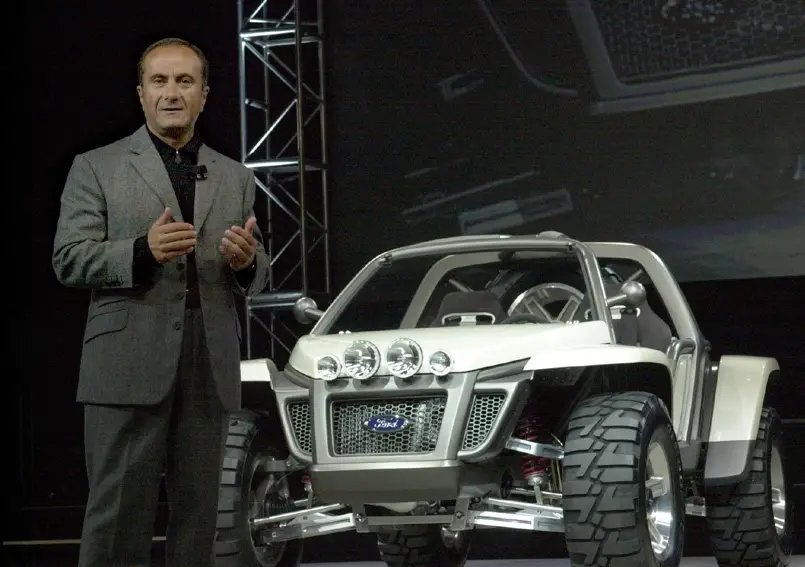
Ford's global president, Jac Nasser, took personal control of the growing crisis, flying in from Detroit to sign a comprehensive agreement with the unions to stamp out discrimination and harassment.


And one year on, the company denies there has been little improvement.
"I think a lot has changed in Ford in the last 12 months since the unfortunate incident with Mr Parmar," a company spokesman said.
Advertisement blunder
"We have had a lot of actions that I would describe as immediate, on the ground actions that are medium term in nature and other actions that are longer term."
Four years ago, Ford apologised and paid compensation to four black workers after white faces were imposed on their photographs in a sales brochure.
The following year, the company had to pay out more than £70,000 compensation to seven Asian and Afro-Caribbean workers at Dagenham who were turned down for jobs in the truck fleet where pay is roughly double the shopfloor average but where fewer than 2% were from ethnic minorities.
Sage publishing Report ctd:
However, Ball has a different take:
Without trying to be defensive or anything, diversity has been part of our approach for a long time at Ford. We were conducting ethnic monitoring back in 1967 and had equal opportunities policies in the 1980s. These incidents were flagged up and prompted the company to move forward. It’s part of our history.


Inclusive approach
In 2000, Ford embarked on an approach to diversity and inclusion, which Ball claimed put Ford at the leading edge of HR practice.
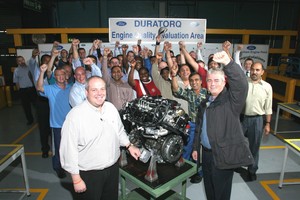
The foundation was an audit of policies and practices, conducted with the collaboration of the Commission for Racial Equality and known as the Diversity and Equality Assessment Review (Dear): ‘Dear has absolutely become part of our business, and that is not a cliche’, Ball said.
One way or another, it seems, Ford has arrived pretty much where it ought to be. The joint equality committees and national equality committee have a life of their own.
‘There are too many of them to be controlled by HR’, said Ball. ‘The Dear approach and a system of annual audits by the national equalities committee have put a rigour into equality and inclusion.’


But where pressing issues of output, quality, change and skill levels are on every manager’s agenda, how does the company make space for diversity?
‘As plant managers, we have a set of objectives known as SQDCME’, said Ball. ‘It stands for safety, quality, delivery, costs, morale and environment.’
That’s six priorities in all plants, not just in the UK but throughout the world, and they are followed through right down to work group level. It’s a wonderfully effective process and you have a scorecard, with the whole thing cascading down from senior management level. Within the ‘morale’ heading there is ‘diversity’ without question.
Dear identified recruitment selection, development, communication, corporate citizenship, policy and planning and auditing for equality as the priorities for action. Each of these is assessed in every plant and sub-unit of the company. In manufacturing plants, the objectives are incorporated into the SQDCME system. Each heading has five or six criteria that are examined and measured against a descriptive, evaluative framework. Managers collect evidence folders during the year to demonstrate how they are meeting their specific targets, and the metrics of equality auditing are built onto that.


Going Green
Managers are assessed by the audit and metrics, which give rise to a traffic light red, yellow or green indicator of how things stand on each of the six headings in each small part of the organization. Getting your colours to green is important, says Ball:
After each annual audit, you end up with your six areas and have quite a detailed breakdown of what you will have to do to turn that level to a green. So you then produce your action plan, based on the audit and your previous audit’s recommendations for improvements.
Diversity, it seems, is being tackled with the logistics of line control, which Ford used to revolutionize commercial motor production in the twentieth century. Henry would be proud!


Refs:
https://study.sagepub.com/rees2e/student-resources/chapter-1/44-diversity-at-ford