October 22nd: Today's Feature - The Black Friar, Southwark
- Oct 21, 2025
- 2 min read
October
The Blackfriar - Southwark
Unveiled in 1958, this relief is a stylised representation of a Black Friar with African facial features riding on a donkey.
It can be viewed very high up on the side of a building in Pocock Street, off Blackfriars Road, above the shops. The stone relief is in the shape of a cross, and it may be that it depicts one of the Dominican monks who took orders in Blackfriars Priory during the 13th century.


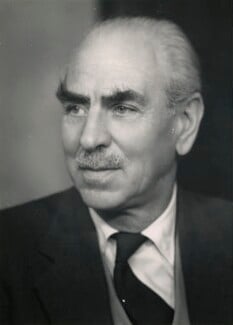


The relief was sculpted by Edward Bainbridge Copnall, who was also president of the Royal Society of Sculptors in the 1960s.
***"A relief comprising a stylised representation of a black friar, represented with stylised facial features, and riding on a donkey. In his right hand he holds a crop, and in his left, a walking stick with a T-shaped handle. Behind him is a stylised representation of water, presumably the Thames. The relief overall is in the approximate shape of a cross superimposed on a rectangle, the friar’s head and donkey’s front legs forming the extremes of the vertical axis and the donkey’s head and tail, emphasised by the background of the river, the horizontal axis of the cross."***
The selection of the subject for this charming sculpture appears to have been influenced primarily by the name of the road, rather than a commitment to historical accuracy. The Blackfriars Priory, which existed from 1278 to 1538, was situated on the northern bank of the Thames, directly north of the current location. During that historical period, there was no Blackfriars Bridge; in fact, London Bridge was the sole dry crossing over the river. As a result, it is highly unlikely that this area ever hosted any black friars, let alone a representation of them in the form of a sculpture. It is improbable that this area ever hosted any black friars, let alone a representation of them in the sculpture. It is possible that the sculptor intended the piece as a playful visual pun, using the name as a whimsical connection to the artwork rather than a reflection of historical fact.
Or did the Artist know something about a black friar that time and history simply forgot? It wouldn't be the first time!

Edward Bainbridge Copnall MBE (29 August 1903 – 18 October 1973) was a British sculptor and painter, born in Cape Town, South Africa in 1903 and moved to Horsham, West Sussex in England as a young child after the death of his mother.
He is best known for his architectural and decorative sculptures featuring allegorical and religious subjects.
Ref: ***