November 14th: Today's feature - Una Marson: Part II
- Nov 14, 2025
- 5 min read
November
Una Marson: Part II
Marson's third play, Pocomania, is about a woman named Stella who is looking for an exciting life. Critics suggest that this play is significant because it demonstrates how an "Afro-religious cult" affects middle-class women.
Pocomania is also one of Marson's most important works because she was able to put the essence of Jamaican culture into it. Critics such as Ivy Baxter said that "Pocomania was a break in tradition because it talked about a cult from the country", and, as such, it represented a turning point in what was acceptable on the stage.
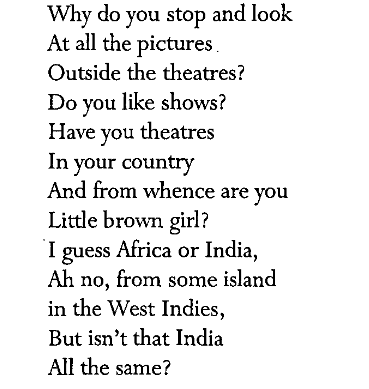
In 1937, Marson wrote a poem called "Quashie comes to London", which is the perspective of England in a Caribbean narrative. In Caribbean dialect, quashie means gullible or unsophisticated. Although initially impressed, Quashie becomes disgusted with England because there is not enough good food there.


The poem shows how, although England has good things to offer, it is Jamaican culture that Quashie misses, and therefore Marson implies that England is supposed to be "the temporary venue for entertainment”. The poem shows how it was possible for a writer to implement Caribbean dialect in a poem, and it is this usage of local dialect that situates Quashie's perspective of England as a Caribbean perspective.
London years (1938–45)
Marson returned to London in 1938 to continue work on the Jamaican Save the Children project that she started in Jamaica, and also to be on the staff of the Jamaican Standard. In March 1940, Marson published an article entitled "We Want Books - But Do We Encourage Our Writers?" in Public Opinion, a political weekly, in an effort to spur Caribbean nationalism through literature.
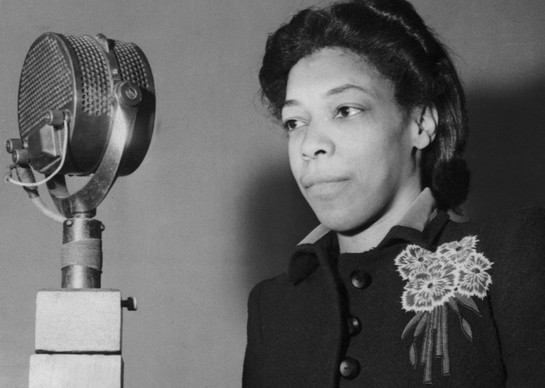
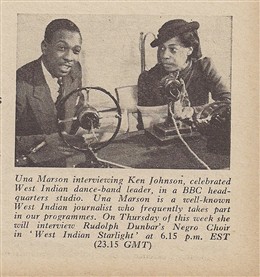
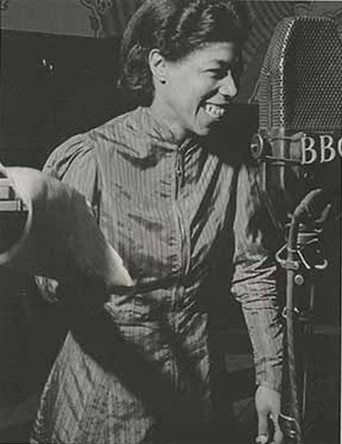
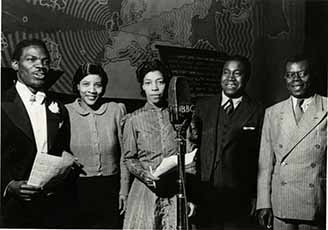
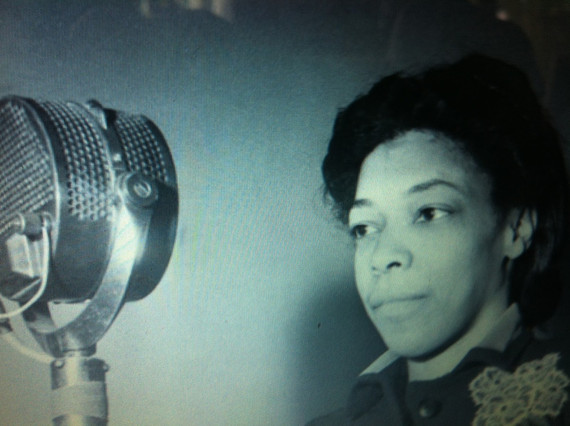
In 1941, she was hired by the BBC Empire Service to work on the programme Calling the West Indies, in which World War II soldiers would have their messages read on the radio to their families, becoming the producer of the programme by 1942.

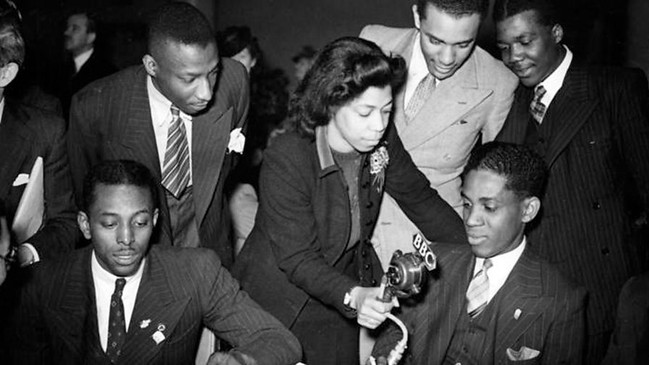

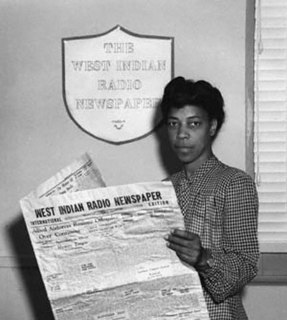
During the same year, Marson turned the programme into Caribbean Voices, as a forum in which Caribbean literary work was read over the radio. Through this show, Marson met people such as J. E. Clare McFarlane, Vic Reid, Andrew Salkey, Langston Hughes, James Weldon Johnson, Jomo Kenyatta, Haile Selassie, Marcus Garvey, Amy Garvey, Nancy Cunard, Sylvia Pankhurst, Winifred Holtby, Paul Robeson, John Masefield, Louis MacNeice, T. S. Eliot, Tambimuttu and George Orwell.
The latter helped Marson edit the programme before she turned it into Caribbean Voices. She also established a firm friendship with Mary Treadgold, who eventually took over her role when Marson returned to Jamaica. However, "despite these experiences and personal connections, there is a strong sense, in Marson's poetry and in Jarrett-Macauley's biography [The Life of Una Marson], that Marson remained something of an isolated and marginal figure".
Marson's radio programme, Caribbean Voices, was subsequently produced by Henry Swanzy, who took over after she returned to Jamaica.



Life after World War II (1945–65)
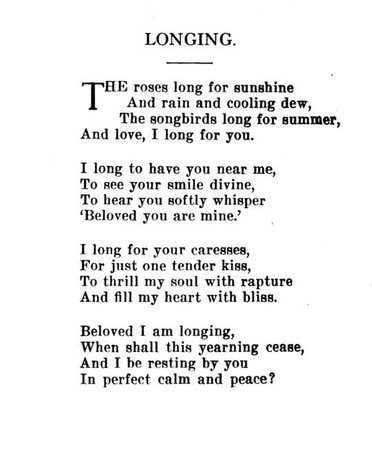
Details of Marson's life are limited, and those pertaining to her personal and professional life post-1945 are particularly elusive. In 1945, she published a poetry collection entitled Towards the Stars. This marked a shift in the focus of her poetry: while she once wrote about female sadness over lost love, poems from Towards the Stars were much more focused on the independent woman.
Her efforts outside of her writing seem to work in collaboration with these sentiments, though conflicting stories offer little concrete evidence about what she exactly did.
Sources differ in outlining Marson's personal life during this time period. Author Erika J. Waters states that Marson was a secretary for the Pioneer Press, a publishing company in Jamaica for Jamaican authors. This source believes that she then moved in the 1950s to Washington, DC, where she met and married a dentist named Peter Staples.

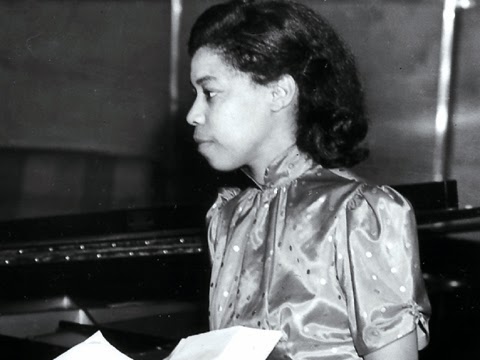

The couple allegedly divorced, allowing Marson to travel to England, Israel, then back to Jamaica; following a heart attack, she died aged 60 in May 1965, at St. Josephs Hospital, Kingston, and was buried on 10 May at the Half-Way-Tree Parish Cemetery.
Another source, written by Lee M. Jenkins, offers a very different take on Marson's personal life and says that Marson was sent to a mental hospital following a breakdown during the years 1946–49.
After being discharged, Marson founded the Pioneer Press. This source claims that she spent a period in the 1950s in the US, where she had another breakdown and was admitted to St. Elizabeth's Asylum. Following this, Marson returned to Jamaica, where she rallied against Rastafarian discrimination. She then went to Israel for a women's conference, an experience that she discussed in her last BBC radio broadcast for Woman's Hour.

The conflicting details regarding Marson's personal life show that there is very little information available about her. For example, Waters' article quotes Marson's criticisms of Porgy and Bess, yet provides no citation for this work.
In combination with this is the limited record of her writings during this time period. Many of her works were left unpublished or circulated only in Jamaica. Most of these writings are only available in the Institute of Jamaica in Kingston, as a special collection at the National Library of Jamaica. Given these constraints, it is difficult to understand the whole of Marson's accomplishments during the final two decades of her life.
Criticism and influences
Critics have both praised and dismissed Marson's poetry. She has been criticized for mimicking European style, such as Romantic and Georgian poetics. For example, Marson's poem "If" parodies the style of Kipling's original poem of the same title. Denise deCaires Narain has suggested that Marson was overlooked because poetry concerning the condition and status of women was not important to audiences at the time the works were produced.


Other critics, by contrast, praised Marson for her modern style. Some, such as Narain, even suggest that her mimicking challenged conventional poetry of the time in an effort to criticize European poets. Regardless, Marson was active in the West Indian writing community during that period. Her involvement with Caribbean Voices was important to publicising Caribbean literature internationally, as well as spurring nationalism within the Caribbean islands that she represented.
Legacy
Marson's poetry was included in the 1992 anthology Daughters of Africa, edited by Margaret Busby.
In 1998, Delia Jarrett-Macauley published the original full-length biography The Life of Una Marson, 1905–1965 (Manchester University Press, reprinted 2010).
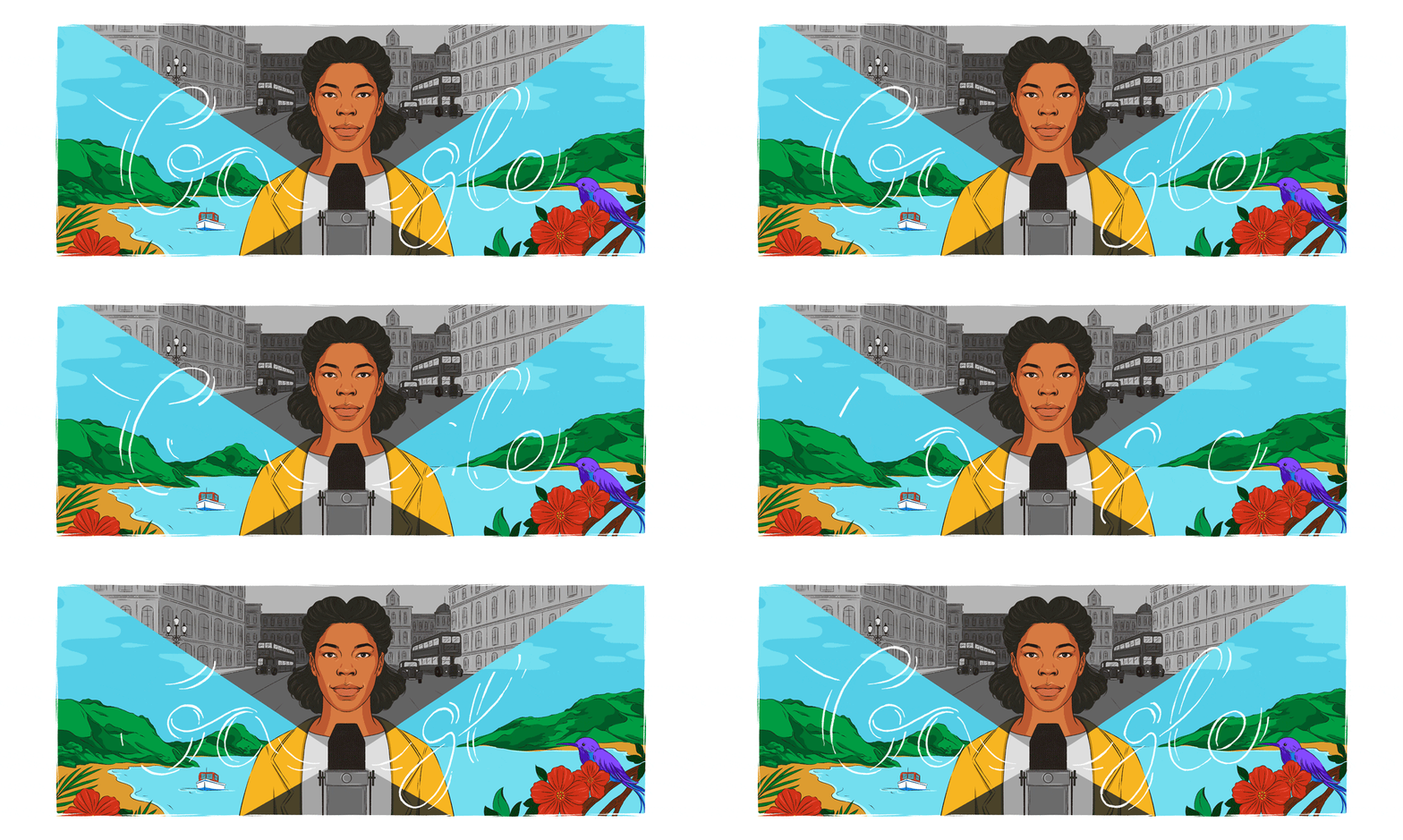
On 10 October 2021, Marson was honoured with a Google Doodle.


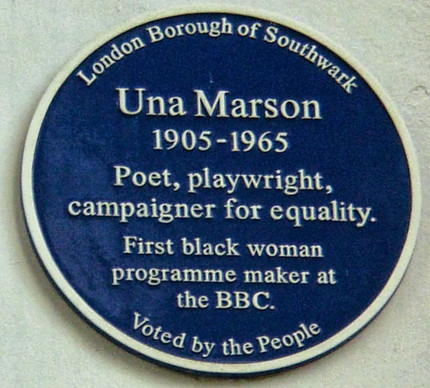
In October 2021, the London Borough of Southwark announced the naming of the Una Marson Library, to be opened in 2022 near the Old Kent Road in south London, recognising Marson as a "local hero”.
In 2022, Lenny Henry's production company, Douglas Road Productions, made a television documentary entitled Una Marson, Our Lost Caribbean Voice, broadcast on BBC Two, in which Delia Jarrett-Macauley asks: "How could we have let someone of Una Marson's calibre just disappear?